



Call to speak with one of our Tour Experts 1-877-230-8747
-
 Victoria Guestx7121
Offline
Victoria Guestx7121
Offline
-
Day 1
Arrival - Luang Prabang
Upon arrival at Luang Prabang airport, arrange your own transfer to the hotel. Enjoy the rest of the day at leisure. In the early evening, the guide will meet you and accompany you to a local restaurant for the welcome dinner.
Meals: Dinner
Accommodation: Hotel in Luang Prabang Note: Check-in at the hotel from 14:00
Hotel: Villa Saykham 3* (or similar) -
Day 2
Luang Prabang
The city of Luang Prabang is one of the most beautiful cities in Southeast Asia, with its perfect location at the meeting point of the Mekong and Nam Khan Rivers and at the foot of an age-old mountain range. Your discovery of Luang Prabang will take you into its most emblematic and culturally-rich sites. In order to fully appreciate your visit of this picturesque city, a guide will share all his knowledge of the city’s history, architecture, and culture with you. The Royal Palace, which nowadays houses the National Museum, has a huge collection of precious items which formerly belong to the royal family, and a large array of statuettes discovered in the temples of the region. Here, you can lay eyes on the Phrabang Buddha, considered as the most sacred artefact of Laos, and which has given its name to the city. Then step aboard a local motorboat to travel to the Pak Ou caves, the most famous Buddhist site around Luang Prabang. This beautiful excursion on the Mekong River, lined with steep karst cliffs and small villages, is the opportunity for you to observe the life lived on its banks. When you reach the caves after the boat ride and after you've climbed the stairs to the entrance, you will be amazed to find thousands of Buddha statues inside. In a beautiful location, not far from Pak Ou Caves, your lunch will be prepared by villagers and set up on a Sala – a traditional Lao bamboo platform with a roof – overlooking the river, giving you a chance to try some local food and enjoy the peaceful atmosphere. Duration of the boat trip: 10 minutes After lunch, continue by boat for 2 hours back to Luang Prabang. Arrival in Luang Prabang, visit the Vat Mai, built at the end of the XVIII century, is a very respected shrine topped by a amazing roof. Meals: Breakfast, lunch Accommodation: Hotel in Luang Prabang Note: Royal Palace opening hours: every morning 8:00 – 11:30 (stop selling tickets at 11:00), every afternoon 13:30 – 16:00 (stop selling tickets at 15:30, except on Thursdays stop at 15:00).
Hotel: Villa Saykham 3* (or similar) -
Day 3
Luang Prabang - Kuang Sy Waterfall
In the early morning, at 5:30 you will travel with your guide to the temple to see the Tak Bath ceremony. During the ceremony, devoted residents of Luang Prabang kneel on the sidewalk, bearing food in their hands, which they offer to the monks as they walk by clad in their saffron-orange robes. Be drawn into this culturally significant moment, as it takes place in a peaceful and respectful manner, with no words exchanged between the monks and the inhabitants making the offerings. After this humbling experience, your guide will take you to a local market, a very animated place to be in the morning, to say the least. After the market tour, you’ll be taken to a welcoming local restaurant beside the Mekong river to try a soup designed to quell your hunger and give you energy for the day. If you’re not up to soup in the morning, you can also just enjoy a coffee while watching the daily routine of the residents. After this, you can return to your hotel for your full breakfast. Duration: Around 2h 30min Notes: Guests will travel to see Tak Bat ceremony from around 05:30 to 06:30 As a guest attending this tradition, you are recommended not to wear revealing clothing. Please do not cross the monk’s path and take photos from a distance to show your respect. Please also maintain a quiet atmosphere. The Khao Soi is only a tasting – guests can return to their hotel afterwards for breakfast should they wish. After breakfast, you will be picked up by your guide and then begin a short trip, travelling through the valley and passing local villages along the way. After reaching the Hmong ethnic community of Ban Long Lao Kao, you will have the opportunity to visit and take in the sights of the village. Then, start your walk to the famous Kuang Sy waterfalls, walking through vegetable gardens, rice fields and forests under the shade of hardwood trees, such as rosewood and ebony. After arriving at the Kuang Sy waterfalls, enjoy a delicious lunch at a local restaurant. Take a rest, or the chance to go swimming, before heading back to Luang Prabang. Rest of the day at leisure or visit the night market at your own pace.
Meals included: Breakfast, picnic lunch Accommodation: Hotel in Luang Prabang Distance and duration of the hike: 8 kilometers - about 3h 30min; can be around 4-5 hours in rainy season
Level:1
Hotel: Villa Saykham 3* (or similar) -
Day 4
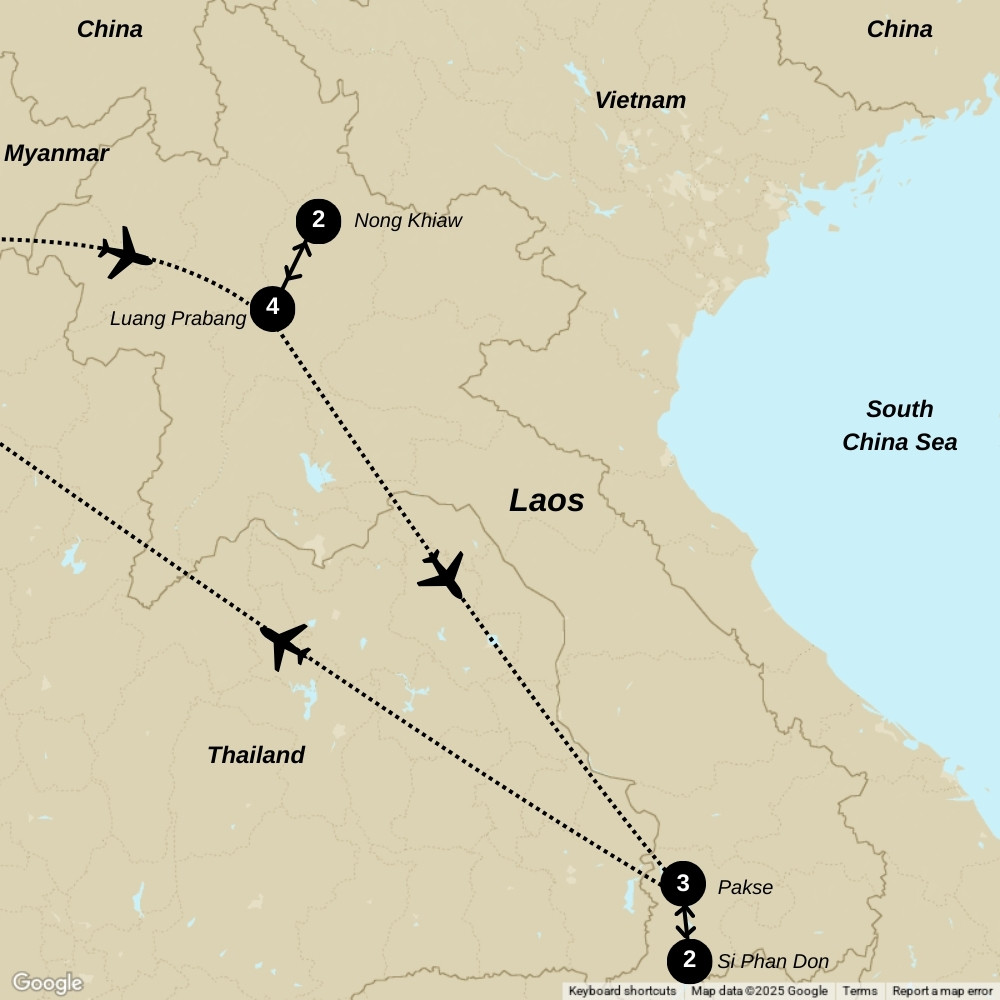
Luang Prabang - Nong Khiaw
This morning, travel from Luang Prabang to Nong Khiaw, then visit Nong Kiew view point. Situated on the banks of the peaceful Nam Ou River, Nong Khiaw is a charming town surrounded by some of the most fantastic limestone mountains in the north of Laos. Today, you will discover the beautiful natural environment with a hike to the top of the mountain along the small path. Enjoy the adventurous feeling of climbing at your own rhythm up a hill covered with a lush forest. Along the trail, you’ll find places to sit and rest on bamboo benches and get your breath back before continuing your upward exploration. On the way, there are ropes set up at some points that you can use to assist your effort. Perhaps a little breathless, but triumphant, you’ll be rewarded at the top of the mountain with a stunning 360-degree panoramic view of Nong Khiaw and the Ou River winding through the surrounding mountains! After a stop at the bamboo Sala at the top to contemplate the beauty of the viewpoint, you will go back to the town. Check in your hotel and spend the balance of the day free at leisure.
Meals included:Breakfast, lunch
Accommodation: Overnight at hotel
Duration of the hike Nong Kiew View Point : 4 kilometers - 2 to 3 hours (around 1h 30min to the viewpoint - 45 minutes to descend)
Level : 1 (maybe a bit more if it is hot or the guests aren’t in good shape – it is 430m of ascent)
Distance from Luang Prabang to Nong Khiaw: 137km, 3.5 - 4 hour driving
Hotel: Phaxang Resort 2* (or similar) -
Day 5
Nong Khiaw - Muang Ngoi - Nong Khiaw
Today, take a boat trip from Nong Khiaw to Muang Ngoi. Your easy walk starts right from the center of Muang Ngoi. After the first 30 minutes you will have the chance to stop at Tam Khang Cave, the former sheltering cave for local villagers during the Indochina war (1960-1972). After visiting (and if you wish a short bath in the rock pool to cool off) you’ll walk further through lush vegetation and cross some rice paddies to reach Ban Na village. Here there is the possibility to explore community life by walking around the small village or enjoying the views of rice fields and the surrounding hills from a small restaurant terrace. After a pleasant relaxation break, it will be time to head back to Muang Ngoi. At a good time, take a boat transfer from Muang Ngoi back to Nong Khiaw.
Meals Included :Breakfast, lunch Accommodation: Hotel in Nong Khiaw
Duration of the boat from Nong Khiaw to Muang Ngoi: 1.5 hour
Hotel: Phaxang Resort 2* (or similar) -
Day 6
Nong Khiaw - Luang Prabang
In the morning, you will travel from Nong Khiaw back to your hotel in Luang Prabang. Balance the day at leisure
Meals included: Breakfast
Accommodation: Hotel in Luang Prabang Distance from Nong Khiaw to Luang Prabang: 137km, 3.5 - 4 hour driving
Note: Hotel check-in time: 14:00 and check-out time: 12:00
Hotel: Villa Saykham 3* (or similar) -
Day 7
Luang Prabang - Pakse - Bolaven
After checking out you will meet your guide and driver, and travel to Luang Prabang airport for your flight to Pakse. Upon arrival in Pakse airport, you will meet the guide and travel to the Bolaven with waterfalls tour. Bolaven is renowned for its altitude and subsequent cool weather. Offering a nice break from the heat of the lowlands during the dry season it is also famed for its coffee plantations and its myriad of waterfalls, each more stunning than the last. Located east of Pakse, you will have the opportunity to discover two of the most impressive falls of the Plateau. Emerging from the jungle, Tad Fan waterfalls are believed to be amongst the highest in the country, springing from a river forming two streams of water pouring down in parallel from 120 meters high. You will enjoy a short walk around to see the coffee plantation and catch a glimpse of the local workers, or do some shopping for traditional crafts if you feel like it. Your optional hike will continue to Tad Yuang waterfalls, cascading down from a gorge of 60 meters deep stretching through the surrounding National Biodiversity Conservation Area. After making your way down the stairs to the bottom, you will have the chance to admire the scenery offered by the natural environment from the viewing point, or relax at the panoramic restaurant, tasting the famous coffee.
Distance and duration of the hike: 3.5 kilometers - 1h 15 min.
Level: 0
Meals: Breakfast
Accommodation: Hotel in Bolaven
Transportation: From Pakse to Bolaven: 41 kilometers - 45 minutes Note: Check-out at the hotel will be 12:00 at latest
Hotel: Sabaidee Valley 3* (or similar) -
Day 8
Bolaven
After breakfast, you’ll head to Paksong, the Laotian capital of coffee production and the gateway to the Bolaven plateau, located at an altitude of 1,300 meters. This region, as authentic as it is beautiful, is now inhabited by different Mon-Khmer ethnic groups but originally the French colonists planted coffee, banana and rubber trees there. Nowadays, the coffee produced on this land is globally recognized. The Bolaven area is rich in hidden treasures that are to be found off the beaten track, and you have to travel by Jeep to discover the best of them. You are welcomed by a passionate coffee farmer who will help you discover a magnificent and impressive waterfall where you can bathe and relax before he invites you to see his land. You can stride across his plantations and watch a traditional coffee roasting. Then, head off for a short walk to explore the small paths surrounded by plantations, fields and forest which eventually lead you to the lunch site, set amidst natural and restful scenery. Once you’ve had your fill of delicious local dishes, you will get back in your Jeep for a sensational excursion to the far reaches of the Bolaven plateau to visit remote bamboo villages from the Laven and Souay ethnic minorities where you will have the sensation of having stepped back in the time. Meals included: Breakfast, lunch
Accommodation: Hotel in Bolaven
Distance and duration: 20 kilometers from hotel in Bolaven.
Duration: from 9:00 to 17:30
Hotel: Sabaidee Valley 3* (or similar) -
Day 9
Bolaven - Si Phan Don
At leisure this morning and enjoy the stay in Bolaven. After leaving behind the splendid scenery of the Bolaven highlands, you will start to feel the temperature getting warmer as you head down to Pakse where you will have lunch. On the way, stop to see the local blacksmiths and to visit a tea/coffee shop. After lunch, enjoy a final few moments taking in this part of Southern Laos’ countryside before travelling by road to the island of Don Khong. Siphandone, the archipelago of 4,000 islands, is the perfect place to feel the laid-back atmosphere of Southern Laos. On the way, visit Vat Hatxaikhun and Ban Ponsaad.
Meals: Breakfast, lunch
Accommodation: Hotel in Don Khong island Distances: Bolaven - Pakse: 50 kilometers (1h). Pakse - Don Khong (Si Phan Done): 150 kilometers (3hrs).
Hotel: Pon Arena Hotel 3* (or similar) -
Day 10
Si Phan Don
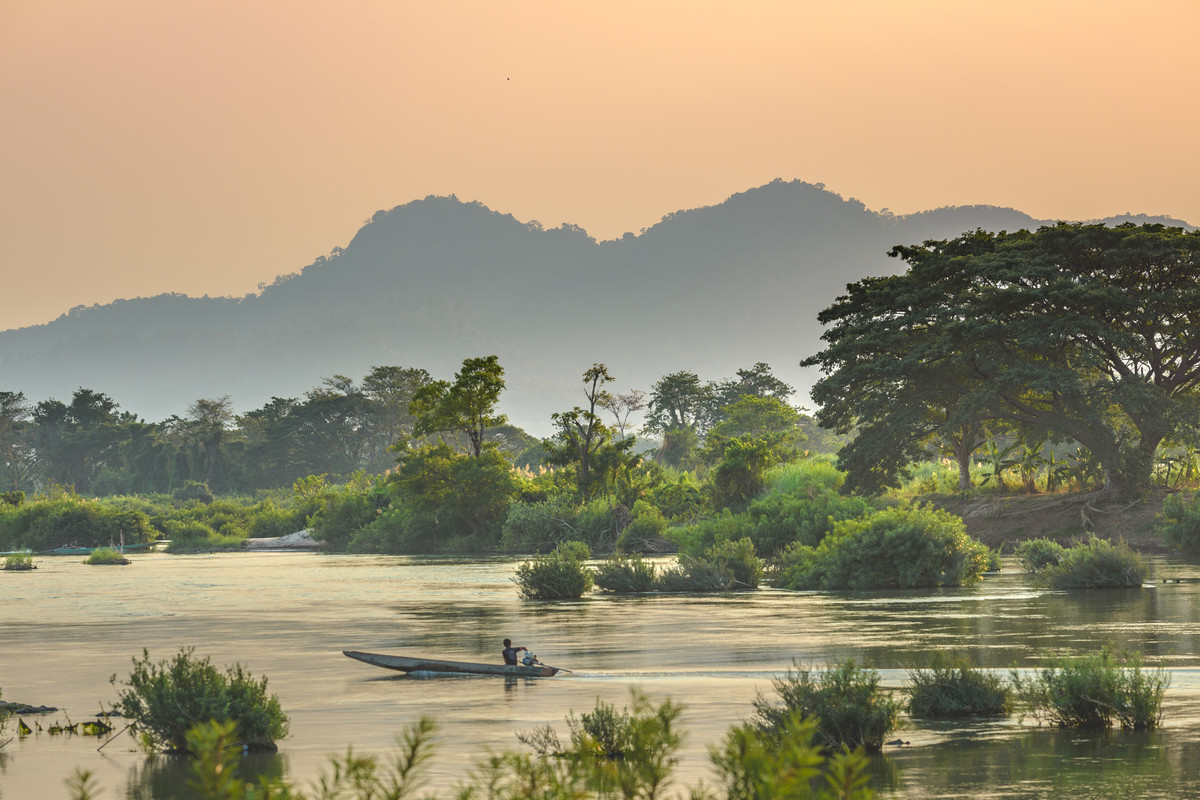
After travelling by car to the south of Don Khong island you will visit a local family in a lowland Lao village to learn about the production of traditional homemade rice paper and rice noodles. Then, your journey will continue by boat to Don Som island where you will stop at Ban Thapho, and where the locals will teach you how to make farmers' hats with palm leaves, which can then be taken home as a handmade souvenir. After another short boat trip you will have the opportunity to stop and discover the old Keng Koum temple, which mixes Buddhist and Hindu influences, before continuing further down the Mekong River to Don Thorlathee island, where local villagers make their livings by selling handicrafts made by bamboo weaving. After one more short cruise to reach Don Xang island, you will be able to enjoy a stroll in a natural environment before continuing on to Don Khone island. In Don Khone island, you will begin with a visit to the famous Liphi waterfalls and the old locomotive from the French colonial era by Samlor or Tuk tuk. You can discover the local life and enjoy incredible views of the Mekong River. Then you will travel back to Don Khong island by car after crossing to the Nakasang boat pier on the mainland.
Meals included: Breakfast, lunch
Accommodation: Overnight at hotel in Don Khong Island
Hotel: Pon Arena Hotel 3* (or similar) -
Day 11
Si Phan Don - Champasak
Following breakfast, you will head back north to Champasak. Arrival in Champasak, visit Vat Phou temple Vat Phou is a pre-Angkorian temple complex listed as a UNESCO World Heritage site. On arrival, you will transfer by electric car to the base of the sacred mount Phou Kao, passing two artificial lakes. From there, you’ll walk to the ancient axis which is demarcated by stone pillars leading to the first terrace and where silently stand the ruined Khmer Hindu palaces adorned with fine sculptures. From there, antique stairs bordered by frangipani trees climb up to a third temple with a unique structure dedicated to the Lord Shiva. Your exploration will continue behind the temple where you can see a natural spring and stone animal carvings before making your way back down to the entrance. Distance: From Champasak: 8 kilometers - 20 minutes. Duration of the visit: about 1h 30min Then, walk from Vat Muang Kang to Wat Phanon The countryside around Champasak is amongst the most charming in Laos. Let’s discover it today, with a walk starting at Vat Muang Kang, the oldest active temple in Champasak, which combines elements of French colonial and Lao Buddhist architecture. Located along the Mekong River, the site offers beautiful views and peaceful atmosphere. You can enjoy a stroll in the gardens where are scattered historical buildings and a wooden dormitory for the monks. From there, you will start to walk on a path shadowed by bamboo trees, passing through traditional villages where the local people make sticky rice boxes, handicrafts and food specialities. During the walk, you will enjoy picturesque sceneries on the mighty Mekong before arriving at Vat Phanon. At the end of the afternoon, embark the boat to Don Daeng Island and free time to enjoy the La Folie Lodge resort.
Meals: Breakfast, lunch
Accommodation: Hotel in Don Daeng island (La Folie Lodge)
Transportation: Si Phan Don - Champasak: 150 kilometers - 3 hours.
Hotel: Champasak Grand Hotel 4* (or similar) - Day 12 Return Depending to your departure flight, this morning is at leisure or to explore the nearby villages on foot at your own pace. Then you will embark the cruise from Don Daeng island back to Champasak, and travel Pakse airport for your departure flight. Meals: Breakfast Transportation: Champasak - Pakse airport: 40 kilometers - 50minutes. Note: Check-out at the hotel will be 12:00 at latest
Included
- Accommodation in the category chosen or similar (subject to availability).
- Meals as mentioned in the program. B= Breakfast – L=Lunch – D=Dinner.
- All local boat rental as mentioned in the program.
- Transfer with A/C as mentioned.
- All entrance fees and sightseeing as mentioned in the program.
- Local English speaking guide(s) as mentioned (1 in the North & 1 in the South).
Exclusions
- Meals and drinks which are not mentioned in the program.
- International flight tickets and airport taxes. All internal/regional flight tickets in economy class.
- Visa fees upon arrival in Laos.
- Tips & personal expenses.
- Personal insurance.
- Any services not clearly mentioned in the program.
Laos – At a Glance
Laos is a country that seems suspended outside of time. Far from mass tourism, it has preserved a rare sense of authenticity in Southeast Asia. Vast rice fields stretch endlessly across the landscape, dotted with water buffalo working peacefully, while the Mekong River—the nation’s true lifeline—reflects ever-changing skies and sets the rhythm of daily life. Buddhism deeply shapes Laos, influencing both its scenery and the gentle, welcoming attitude of its people. Traveling through Laos means slowing down, observing, and allowing yourself to be carried by a serene, profoundly human atmosphere.
General Information
The capital of Laos is Vientiane. The country covers an area of 236,800 km², and Lao is the official language. The local currency is the Lao kip, although foreign currencies may sometimes be accepted in tourist areas. The international dialing code is +856. Laos is 12 hours ahead of Montreal, and the electrical voltage is 230 volts.
Did You Know…
Laos is often referred to as the “Land of a Million Elephants,” a symbol of its strength and historical heritage. Rice is the cornerstone of daily life and appears at nearly every meal. Laos is the only landlocked country in Southeast Asia. The Mekong River flows through the country from north to south and plays a vital role in agriculture, trade, and social life. Buddhism is the dominant religion and strongly influences everyday customs. Laos is also known for its coffee production, primarily grown on the Bolovens Plateau, and is home to the widest waterfalls in the world, including Khone Phapheng Falls.
Luang Prabang
Formerly the royal capital, Luang Prabang is the cultural and spiritual jewel of Laos. Listed as a UNESCO World Heritage Site, the city is renowned for its harmonious blend of French colonial architecture, Buddhist temples, and surrounding nature. Built at the confluence of the Mekong and Nam Khan rivers, it offers gentle, picturesque views. Temples are plentiful and animated by the daily presence of monks. Nearby, the Kuang Si and Tad Sae waterfalls attract visitors with their turquoise waters and natural pools. At nightfall, the vibrant night markets illuminate the streets, revealing a livelier yet still serene side of the city.
Si Phan Don – The 4,000 Islands
In the far south of the country, Si Phan Don—literally the 4,000 Islands—forms a unique river archipelago along the Mekong River near the Cambodian border. This region is a true haven of tranquility, where time seems to slow to a gentle pace. Some islands are home to welcoming fishing villages, while others remain completely uninhabited. Travelers can relax, explore by bicycle or kayak, or visit the impressive Khone Phapheng Falls. Nearby archaeological sites such as Vat Phou, Phou Asa, and the former royal city of Champassak further enrich the experience.
Cruising the Mekong River
The Mekong lies at the heart of Laotian identity. Traveling down the river by boat offers a unique perspective on the country, revealing riverside villages, scenes of daily life, and ever-changing landscapes. River traffic remains an essential part of the local economy. This peaceful, contemplative journey provides a privileged glimpse into the soul of Laos and is often one of the most memorable experiences of a trip.
Vang Vieng
Set along the Nam Song River, Vang Vieng is surrounded by spectacular karst cliffs that dominate the valley. Lush rice fields contrast with dramatic limestone formations, creating a striking natural setting. Once known primarily for its party scene, the town has reinvented itself and now offers a wide range of activities, including tubing, kayaking, hiking, rock climbing, caving, and even hot-air balloon rides. Vang Vieng appeals equally to adventure seekers and lovers of grand landscapes.
The Bolovens Plateau
Located in southern Laos, the Bolovens Plateau stands out for its cooler climate and verdant scenery. Still relatively unexplored, the region is famous for its coffee plantations, impressive waterfalls, and dense forests. Exploring the plateau by motorbike or bicycle allows travelers to experience authentic rural life and meet local ethnic minorities while enjoying pristine natural surroundings.
The Vieng Xai Caves
The Vieng Xai Caves are a major historical and cultural site. They served as shelters for the leaders of the Pathet Lao during the civil war in the 1970s. These natural caves once housed meeting rooms, living quarters, and even entertainment spaces. Today, they offer a fascinating insight into the country’s recent history, while also impressing visitors with their natural beauty.
Vat Phou
Listed as a UNESCO World Heritage Site, Vat Phou is a Khmer temple complex dating back over a thousand years. Located at the base of a sacred mountain, this important archaeological site is often compared to a “smaller Angkor” due to its architecture and historical significance. Visiting the site by bicycle or motorbike allows travelers to explore the ruins in a peaceful and deeply spiritual setting.
Vientiane
Vientiane, the capital of Laos, exudes a relaxed and unhurried atmosphere, very different from most major Asian capitals. Tree-lined streets reveal a harmonious mix of French colonial villas, traditional homes, and Buddhist temples. Key landmarks include Patuxai, the triumphal arch commemorating independence; Pha That Luang, the country’s national symbol; and Vat Si Saket, home to thousands of Buddha statues. Nearby, the Buddha Park offers a unique and contemplative experience with its monumental sculptures.
Cuisine
Laotian cuisine is simple, flavorful, and sometimes spicy. While it shares certain ingredients with neighboring Thailand, it is distinguished by generous use of lime, lemongrass, coriander, and coconut milk. Sticky rice accompanies nearly every meal and is often served in small bamboo baskets. Laap, a finely seasoned meat or fish salad, is considered the national dish. Noodle soups, fish steamed in banana leaves, and traditional stews round out a cuisine rich in flavor. Desserts made from sticky rice and coconut milk add a welcome touch of sweetness.
Drinks
Beer Lao is the country’s most popular alcoholic beverage. Light and refreshing, it pairs perfectly with local dishes, especially grilled meats. Green tea, grown on the Bolovens Plateau, is widely consumed on a daily basis. Lao-lao, a strong rice alcohol, is considered the national spirit and is commonly found in local eateries.
Shopping and Souvenirs
Laotian handicrafts are both rich and diverse. Markets—especially in Luang Prabang—overflow with wooden carvings, bamboo baskets, handmade pottery, and traditional textiles. Sinh skirts and pha biang scarves showcase local textile expertise. Traditional dolls, fabric elephants, and handmade paper lamps make meaningful souvenirs that reflect the country’s culture and history. Coffee and tea from the highlands are also excellent gifts to bring home.
Safety
Laos is considered a safe country, with a relatively low crime rate compared to neighboring nations. Nevertheless, basic precautions are advised, particularly at night, and valuables should always be kept secure.
Health Advice
As tap water is not drinkable, bottled water should always be consumed. It is recommended to eat well-cooked or peeled foods and to purchase travel medical insurance covering care abroad. Canadian health authorities recommend certain vaccinations prior to departure, depending on individual circumstances.
Climate
Laos has a tropical climate that varies with altitude. Average temperatures hover around 25°C, with hotter conditions in the south, particularly around Pakse. The dry season is generally the most pleasant time to travel, while the rainy season brings lush vegetation and spectacular waterfalls.
Religions and Beliefs
TheravÄda Buddhism is the dominant religion in Laos and deeply influences daily life. Monasteries serve as important centers of meditation and learning, and religious practices shape the social rhythm of the country. Minority Christian and Muslim communities also coexist peacefully, reflecting a climate of religious tolerance.
Etiquette and Customs
Laotian society is founded on values of respect, modesty, and harmony. Greetings are exchanged using the nop, a gesture of hands pressed together accompanied by a slight bow. Respect for elders is essential, as is emotional restraint in public. Dress should remain modest, especially when visiting temples. It is also important never to touch someone’s head, which is considered sacred in Laotian culture.
Name: North and South of Laos
Brand: Pathways of the World
Quality: Tourist Class
Tour Type: Escorted
Start City: Luang Prabang
End City: Pakse
Vacation Overview:
- Visit Luang Prabang with an expert local guide and learn the secrets of this incredible UNESCO World Heritage Site.
- Hike to the majestic Kuang Sy Waterfall and enjoy lunch in a local home.
- Experience a relaxing cruise in the Nam Ou River and to visit the Pak Ou Caves admiring the unforgettable landscapes.
- Enjoy some of the most stunning panoramic views in northern Laos.
- Hike though villages and interact with locals to learn about their daily lives and incredible culture and traditions.
- Discover some of the most stunning scenery in all of Laos – including the most impressive waterfalls in Southeast Asia – from Laos‘ tallest waterfall Tad Fane to Southeast Asia’s largest in terms of volume Khone Phapheng.