



-
Day 1
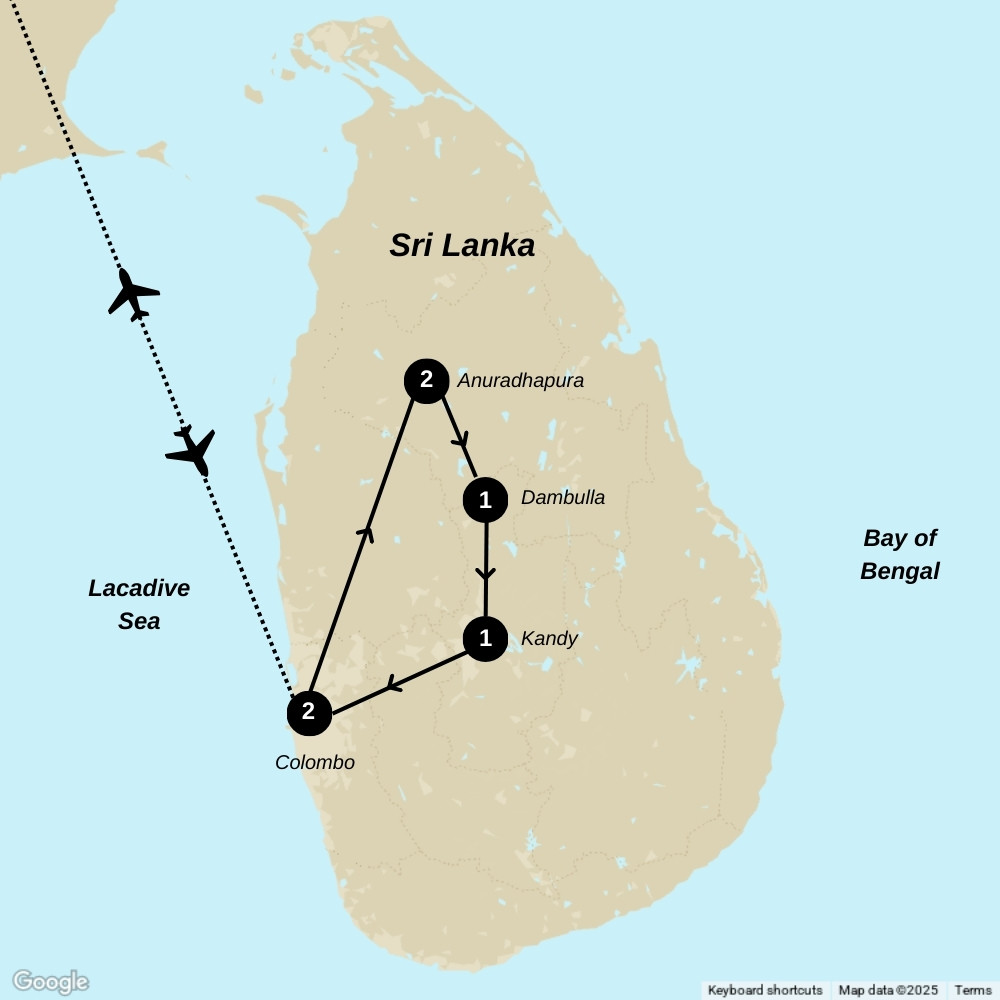
Arrival Colombo - Negombo
Upon arrival at Colombo Airport our representative will meet and greet you before guiding you to the transfer to your hotel in Negombo. Settle in your room before spending the rest of this first day at leisure. Located within a close range to Bandaranaike International Airport, Negombo - the cinnamon hub of the Colonization of Dutch - offers some of the most exiting diving stretches in the country. With quite a pleasant beach and lagoon, watch how Negombo dishes out some of the best lobsters, prawns and crabs found in the country, right on to your table or simply grab your kiteboards for an enthralling fly over crashing waves. Today Negombo also represents an ultimate nightlife featuring bars, disco bars and clubs. So, jazz up to the rhythm of the West, and be ready for a night of 'fest', because at Negombo everything is 'best'. Overnight in Negombo
Hotel: Hotel J 3* (or similar) -
Day 2
Negombo - Anuradhapura
fter breakfast at the hotel visit the local fish market & fish drying area. The Negombo Fish Market takes place right on the beach, fresh from fishing boats. Crowds of fishermen are seen untangling their fishing nets, playing with their kids, and stretching out miles of fish to dry in the sun on Negombo's shore. Take a stroll around the market to witness how the local fishermen handle the process of fish drying by the sea. Next, transfer to Chilaw to visit Munneshwaram Hindu Kovil. Munneswaram Hindu Temple is an important regional Hindu temple complex in Sri Lanka. It has been in existence at least since 1000 CE, although myths surrounding the temple associate it with the popular Indian epic Ramayana, and its legendary hero-king Rama. The temple is one of the ancient Pancha Ishwarams dedicated to Shiva in the region. Then, transfer to Anuradhapura and check in to your hotel. Overnight in Anuradhapura
Hotel: Miridiya Lake Resort 3* (or similar) -
Day 3
Anuradhapura
After breakfast at hotel visit Wilpattu National Park. This is the land haunted by big cats of the island paradise. Recording a vast number of Sri Lankan Leopards - smarter looking than its Indian cousin - Wilpattu National Park has been named due to 'Willus' (Natural Lakes) studded throughout the park. Apart from big cats and precious flora, the park is well known for a healthy population of elephant, sloth bear, spotted deer, mongoose and water buffalo. Do not be surprised if the squeal of a helpless wild boar pierce through your ears, just observe closer and you might be presented with a fantastic hunt because it is all action that speaks at Wilpattu. Then, return to your hotel and in the evening visit Anuradhapura ancient kingdom. Commanding a rich Sri Lankan heritage, Anuradhapura – one of the greatest and oldest civilization in the world starring 113 kings and spanning over 1300 years in its peak, vows of being the greatest city of ancient Sri Lanka following its reign as the first capital. The sapphire of its crown is certainly the Sri Maha Bodhi, the sacred BO sapling extracted from the tree under which Lord Buddha attained enlightenment. Standing more than 220 years in its pride. Stroll through the sacred trails of the venerated city to adore the legacy that interweaves Ruwanweliseya. The heritage, Supremacy and culture arguably makes Anuradhapura the strongest kingdom of Sri Lanka. Overnight in Anuradhapura
Hotel: Miridiya Lake Resort 3* (or similar) -
Day 4
Anuradhapura - Sigiriya - Dambulla
After breakfast at hotel transfer to Sigiriya and visit Sigiriya Rock Fortress. The 5th century rock citadel of King Kasyapa and World Heritage Site - Sigiriya - does not only boasts of ancient Sri Lankan engineering & urban planning supremacy but also acclaims to be one of the finest monuments of art & culture. Step through the gigantic 'Lion Paws' - overlooking the symmetrical royal gardens below - to comprehend the absolute splendor that once dominated this rock fortress. Surrounded by ramparts and moats the Lion Rock - resembling the mythological 'City of Gods' - is coated by frescoes that relate to Gupta style paintings found in Ajanta caves of India. Next, visit Hiriwadunna village. The scenic village of Hiriwadunna with its unpaved gravel paths and humble village folk. Shaded on either side by dry zone shrub forest, the dusty gravel path and subsequently the red soil of the tank bund will lead the visitors to an indigo reservoir which sets a stunning contrast of colors. A line of cormorants flying in formation will eventually stop to rest on a cormorant tree and the butterflies and dragonflies found at the edge of the shrubs create a kaleidoscope of color that rivals the equally vibrant wild flowers. As you walk further the sight of Sigiriya rock fortress appears in the vicinity against the silent and still waters of the reservoir which is rippled only by a lone fisherman mounted on his catamaran. Soon it’s already time to take a catamaran ride! Across the reservoir awaits a Chena farmer’s modest home; a setting that takes you back a few decades to enjoy a black Ceylonese tea brewed by the farmer’s wife. Experience the simple pleasures of village-life as you walk across the Chena cultivations and through the nearby woods, to board a bullock cart – yet another ancient mode of the humble villagers’ transportation. At the end of the tour transfer to Dambulla and check in to your hotel. Overnight in Dambulla
Hotel: Fresco Water Villa 3* (or similar) -
Day 5
Dambulla - Matale - Kandy
After breakfast at hotel visit Dambulla Cave Temple. In the city of Dambulla lies a hub which has been treasured by many kings since the 1st century B.C. Today, an icon in the face of Sri Lanka, Dambulla Rock Temple houses some of the most unique drawings in magnificently constructed 5 cave temples flanking the golden temple of Dambulla. Observe how exquisitely cave paintings are done along walls that shelter 150 statues of Lord Buddha. As you enter the retreat, look straight up to the gigantic Buddha statue glittering in gold over a land, which today houses an important junction in the country's economic and cultural uplifting. Next, visit Dambulla vegetable market and experience how the village folk trade the home grown vegetables that’s distributed around the island. Even if you’re not looking to buy a truckload of bananas, this vast wholesale market south of the centre offers a fascinating look at the vast range of produce grown in Sri Lanka. What you see being carted about with manic energy (be careful and stay out of everybody’s way) will be sold in Colombo tomorrow. Then, transfer from Dambulla to Matale to visit a Spice Garden. An agricultural zone in the Central Province, Matale seldom drops off the maps due to its remarkable contribution through flagship crops of the island extending from tea, rubber & vegetables to spices. Spearheading the Rebellion back in 1848, Matale today takes immense pride in its story woven around spices. Stop by the side of a spice garden - into which you will be most welcome - and observe the therapeutic values of spices and processes over a refreshing cup of herbal tea! Or spend some time idling on the hardened streets if you want a real town adventure filled with voices and colors. Then, transfer from Matale to Kandy and check in to your hotel. Overnight in Kandy
Hotel: Oak Ray Heritage 3* (or similar) -
Day 6
Kandy - Colombo
Breakfast at the hotel. Then, explore Kandy City. Last ruled by King Sri Wickrama Rajasinghe - before it was brought under the British rule in 1815, Kandy - the World Heritage Site and last royal capital of Sri Lankan kings - crafts an array of culture, history and heritage in the minds of visitors across the globe. Experience an ancient Kandyan legacy engraved around its crown jewel, the temple of the sacred tooth relic of Lord Buddha. A stroll across this small lakeside town - cradled among the misty hills - will feature the Kandy City Centre - bundled with latest and world class brands, bazaar, an arts & crafts centre, as well as a gem museum & lapidary. Walk in color as you glide through fresh fruits and vegetables in the Kandy market. Fine tube your evening by stepping to the beat of traditional music and drumming amplified by a cultural show enhancing the rich and vibrant culture of the Wonder of Asia, Sri Lanka. Then, transfer to Colombo and enjoy an evening City tour in Colombo. Drive along the clean streets edging the crystal white Race Course - horse racing hub in 1893 & World War II airstrip - furnished today with lavish clothing, food and tea boutiques. Meanwhile, ride to Pettah and tune into the Floating Market - an offbeat shopping experience - or feel the buzz surrounding the upcoming inspiration, the Colombo Port City - an offshore city - featuring parks, commercial complexes and even an F1 track. Proceed along Bauddhaloka Mawatha towards 'Arcade' facing a historic way post, the Independence Square. Every designer boutique, top-notch cuisine outlet and even the 'walk-over fish tank', have revamped this colonial masterpiece into one of the trendiest shopping and hangout zones in Colombo. Have a chilled beer at the Dutch Hospital while gazing through fancy windows showcasing best fashion, jewelry & handicraft brands. Smell the scent of incense while listening to the chiming bells of Gangarama temple. Or, jazz up to Colombo's night life spiced by night clubs & casinos that borderline its bustle. If you're lucky, head into an exhibition at the Bandaranaike Memorial International Conference Hall (BMICH) before swaying your head to an opera or play at Nelum Pokuna that should just drive your day into perfection! Overnight in Colombo
Hotel: Fairway Colombo 3* (or similar) - Day 7 Return After breakfast at the hotel transfer to Colombo Airport for your departure flight.
Included
- Operated with English-speaking driver-guide
- 6 nights’ accommodation
- 6 Breakfasts
- Arrival/ Departure transfers from and to Colombo Airport
- Shared transport throughout the tour
- All entrance fees and activities mentioned in the itinerary: Negombo Fish Market visit Munneswaram Hindu Temple visit Wilpattu National Park visit Anuradhapura tour Sigiriya Rock Fortress visit Hiriwadunna village excursion incuding catamaran ride Dambulla Cave Temple and Dambulla vegetable market visit Matale Spice Garden visit Kandy city tour Colombo city tour
- Meet & Greet on day 1
Exclusions
- Expenditures of a personal nature drinks and meals or items not stated explicitly in the programme
- Departure airport transfer
- Gratuities for drive and guide
- Entrance fees for all sights and attractions
- Any alcoholic and non-alcoholic drinks mineral water etc
- Video camera and photography permits at the Temple of the Tooth Relic in Kandy; video camera permits at Elephant Orphanage
- Optional tours and activities
- Travel Insurance or any loss or extra cost arising due to unforeseen circumstances such as flight delays accidents etc.
SRI LANKA – AT A GLANCE
Formerly known as Ceylon, Sri Lanka is an island nation located south of India, in the heart of the Indian Ocean. Despite its relatively small size, the island offers an astonishing diversity of landscapes. Lush tropical forests, arid plains, misty mountains covered in tea plantations, and golden sandy beaches unfold over short distances, giving travelers the impression of crossing several countries in a single journey. Sri Lanka is also deeply shaped by Buddhism, whose ancient remains dot the landscape. Among them, Sigiriya—a 5th-century citadel perched atop a massive rock—stands out with its frescoes and the ruins of a former royal palace. Farther north, Anuradhapura, an ancient royal capital, preserves religious sites over two thousand years old, bearing witness to a refined and deeply spiritual civilization.
GENERAL INFORMATION
Sri Lanka has a dual capital system. Colombo is the country’s economic capital and main urban center, while Sri Jayawardenapura Kotte, located in its suburbs, serves as the administrative capital. The country covers an area of 65,610 km². The official languages are Sinhala, spoken by approximately 70% of the population, and Tamil. The local currency is the Sri Lankan rupee. Bargaining is part of everyday life, particularly for taxi and tuk-tuk rides, and sometimes in markets. The international dialing code is 94. Sri Lanka is 9 hours and 30 minutes ahead of Montreal. Electricity operates at 230 volts.
DID YOU KNOW…
When visiting temples, it is mandatory to remove your shoes, and wearing socks is strongly recommended, as stone floors exposed to the sun can become extremely hot. Sri Lanka is among the world’s largest tea producers, ranking third with approximately 300,000 tons produced annually, in long-standing competition with India. India itself lies very close by—the two countries are separated by just 31 kilometers at their narrowest point. In Avukana, visitors can admire a monumental Buddha statue carved from granite in the 5th century, remarkable for its exceptional state of preservation. The country is also home to a vast number of artificial lakes, created for irrigation and hydroelectric power. Hydropower remains a major energy source, complemented since the 1980s by solar energy.
COLOMBO
Located on the west coast of the island, Colombo served as Sri Lanka’s capital for many years before the role was transferred to Sri Jayawardenapura Kotte. Today, it remains the country’s economic and cultural hub. A lively and cosmopolitan city, Colombo pulses with religious and cultural celebrations. Vesak, celebrated in mid-May, commemorates the birth, enlightenment, and passing of the Buddha. During this time, the city is adorned with spectacular illuminated decorations, creating a truly magical atmosphere. Christmas is also widely celebrated, despite Christians being a minority, reflecting the country’s religious diversity and spirit of tolerance.
KANDY
Located approximately 116 kilometers east of Colombo, Kandy sits at an altitude of 500 meters, surrounded by lush landscapes nourished by the Mahaweli River. A former royal capital, the city is now listed as a UNESCO World Heritage Site. It is home to the Temple of the Tooth, or Sri Dalada Maligawa, one of the most sacred Buddhist shrines in the country, believed to house a relic of the Buddha. Each year in August, Kandy comes alive during the spectacular Perahera festival, featuring richly adorned elephants, torchbearers, and traditional dancers in a procession that is both solemn and festive.
NUWARA ELIYA
Connected to Kandy by one of the most beautiful railway journeys in the world, Nuwara Eliya lies in the heart of Sri Lanka’s central highlands, about 100 kilometers to the south. The train ride passes through rolling green hills, misty valleys, and endless tea plantations. The town retains a distinctly British atmosphere inherited from the colonial era. Surrounded by manicured gardens and vast tea fields, it is also a starting point for numerous hikes, including routes leading toward Adam’s Peak, one of the country’s most iconic summits.
ELLA
Perched at over 1,000 meters above sea level, Ella offers sweeping views over the southern plains of the island. This small town, surrounded by hills and waterfalls, enjoys a cooler and more pleasant climate than much of the country. Travelers are drawn to its peaceful ambiance, ideal for relaxation and hiking. Trails leading to nearby peaks allow visitors to fully experience the natural beauty and tranquility that define the region.
MIRISSA
On the southern coast, about 150 kilometers from Colombo, Mirissa is a popular destination known for its fine sandy beaches and lively atmosphere. The town is famous for its nightlife as well as for dolphin and whale watching in the Indian Ocean. Warm, clear waters make it ideal for swimming, diving, and other water activities, making Mirissa a must-stop for lovers of sun and sea.
ANURADHAPURA
Located in the north of the country, Anuradhapura is part of Sri Lanka’s renowned Cultural Triangle. A former royal capital between the 4th and 10th centuries, it is now a UNESCO World Heritage Site. Considered the cradle of Theravada Buddhism in Sri Lanka, the city features monumental stupas, monasteries, and the sacred Sri Maha Bodhi tree, grown from a cutting of the tree under which the Buddha is said to have attained enlightenment. The site exudes a deeply spiritual atmosphere.
CUISINE
Sri Lankan cuisine reflects a rich cultural blend. Influenced by local traditions, South Indian cooking, and the legacy of Dutch colonists and foreign traders, it is characterized by generous use of spices, rice, and coconut. Rice, typically boiled or steamed, is served with a variety of curries made from fish, meat, or vegetables. Meals are often accompanied by chutneys, sambals, and pickled vegetables, including the famous coconut sambal flavored with chili and lime.
BEVERAGES
As tap water is not safe to drink, only bottled water should be consumed, including for brushing teeth. Tea is the national beverage, usually served strong, sweetened, and with a splash of milk. Fresh fruit juices made from pineapple, mango, papaya, or watermelon are extremely popular. Coconut water from the King Coconut is widely sold along roadsides and provides a refreshing, natural drink. Local beer is light and widely enjoyed, while arrack—an alcohol distilled from coconut sap—is often consumed neat or mixed. Toddy, a naturally fermented beverage, has a flavor reminiscent of beer.
SHOPPING AND SOUVENIRS
Sri Lanka is world-famous for its Ceylon tea, primarily cultivated in the highlands. Spices such as cinnamon and cardamom also play a central role in local craftsmanship. Gemstones are highly sought after, as are traditional masks from Ambalangoda and wood carvings. Major cities like Colombo, Kandy, and Hikkaduwa offer many shopping opportunities, where bargaining is common practice.
SAFETY
Although marked by a past of civil war and terrorist attacks, Sri Lanka is now a far more peaceful country. Security measures have been strengthened, and the situation has significantly stabilized. As in any country with social inequalities, certain precautions remain necessary, particularly regarding petty crime or street harassment. These issues, however, do not define the country as a whole, which is widely known for the kindness and hospitality of its people. The Canadian embassy is located in Colombo.
HEALTH ADVICE
It is essential to ensure that all vaccinations are up to date before departure. Several vaccines are recommended for Sri Lanka, including hepatitis A and B, typhoid, rabies, and Japanese encephalitis. Travelers should also protect themselves against mosquito bites, which can transmit diseases such as dengue and chikungunya. Special attention should be paid to food hygiene to avoid traveler’s diarrhea.
CLIMATE
Sri Lanka enjoys a tropical climate with warm temperatures throughout the year. Two main seasons alternate—the dry season and the monsoon—whose timing varies by region. This unique pattern allows for travel almost year-round by choosing the most favorable area. The south and west coasts are ideal from December to March, while the east coast is best visited from May to September. In mountainous regions such as Nuwara Eliya, the climate is cooler, with temperatures around 20°C. Sea temperatures remain warm year-round, averaging about 28°C.
RELIGIONS AND BELIEFS
Sri Lanka’s constitution guarantees freedom of religion. Buddhism is the dominant faith, practiced by approximately 70% of the population. Hinduism, Islam, and Christianity are also well represented, contributing to the country’s rich spiritual and cultural diversity.
ETIQUETTE AND CUSTOMS
Sri Lankans are widely known for their kindness and warm hospitality. Politeness, patience, and respect are fundamental values. Body language, particularly head movements, may be confusing for visitors. Society remains relatively conservative, and modest clothing is recommended, especially in religious sites. Full moon days, known as poya days, are public holidays and hold deep religious significance for Buddhists; alcohol sales are prohibited on these days. Meals are often eaten with the right hand, as the left hand is traditionally considered impure.
Name: The local way
Brand: tripcentral tours
Quality: Tourist Class
Tour Type: Escorted
Start City: Colombo
End City: Colombo
Vacation Overview:
Even though Sri Lanka is an island, it’s not all to do with sails, sand and the sea. Experience Sri Lanka’s centuries old proud history with a hint of its traditions and culture which is no doubt exclusive only to this magical island. Formally known as “Ceylon”, Sri Lanka is also called the pearl of the Indian Ocean. Start off the round tour by exploring one of the most famous fishing destinations, “Negombo”. With quite a pleasant beach and lagoon, watch how Negombo dishes out some of the best lobsters, prawns and crabs found in the country, right on to your table or simply grab your kiteboards for an enthralling fly over crashing waves. Proceed your way towards the upper central part of Lanka to get a glimpse of the ruins of ancient kingdoms and massive Buddha Stupas. Don’t forget to take a visit to what people call the World’s 8th wonder “Sigiriya Rock Fortress”.