



-
Day 1
Arrival in Muscat
Upon arrival at Muscat International Airport,
you will complete the formalities to obtain an entry visa.
Then you will collect your luggage. Customs procedures and baggage claim are quick and easy. Then you will be welcomed by our Miracle Oman representative.
At 9:00 a.m., departure to discover the capital of the Sultanate, founded in the first century and a crossroads between the Arabian Peninsula, Asia and
Africa. This day will begin with the discovery of the great mosque of Sultan Qaboos; a true architectural masterpiece.
Departure for the Batinah region, one of the most fertile coasts in the country. The first stop will be at the village of Barka, to discover the fish market.
Continue to the Bait al Ghassam museum, housed in an ancient Omani castle and traditional residence of the Omani nobility.
We will continue to Nakhl; an ancient village surrounded by palm groves, known for its fort and thermal springs; visit the fort, built in the 16th century on a rocky outcrop, formerly owned by the Imam of the Bani Kharous dynasty, later Yarubah. Dinner.
Continue to Ain Thowara, a thermal water source. Return to Muscat.
Meals: Not Included -
Day 2
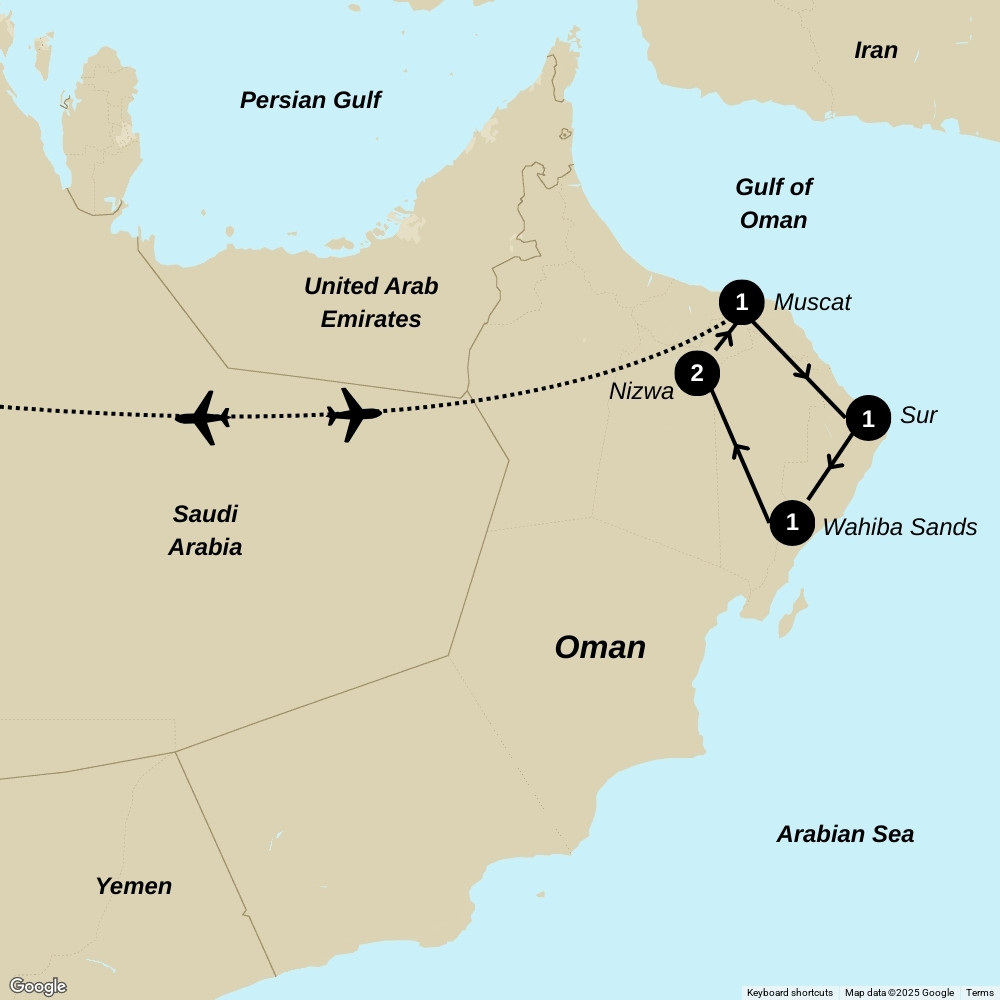
Muscat - Bimah Sinkhole - Sur
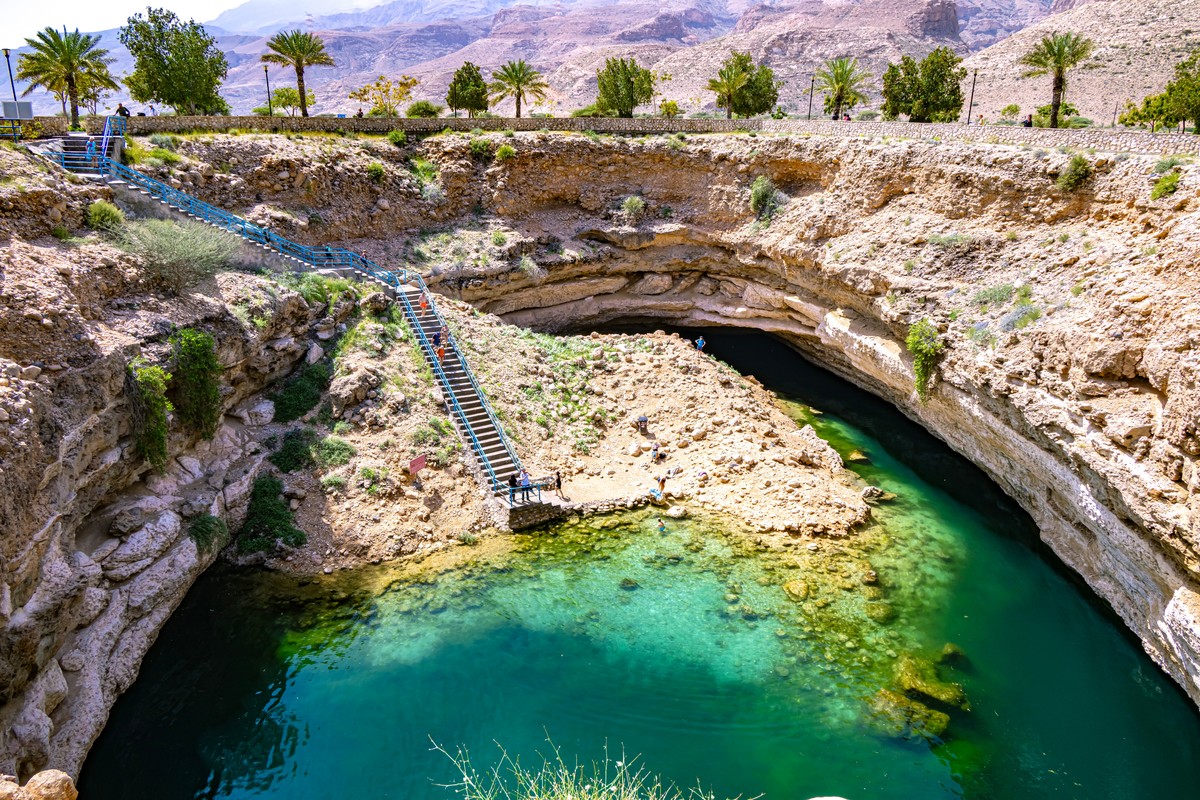
Breakfast. Departure for the Bimah hole, a deep natural depression filled with water. Local tradition
states that a meteorite fell there, causing the natural depression and forming a small lake.
Continue towards Wadi Tiwi; a spectacular deep, narrow chasm cut into the mountains, which winds between steep cliffs to the sea. It is surrounded by lush date and banana plantations. Dinner in a local restaurant.
Departure for the coastal town of Sur; visit the factory of dhows (traditional wooden boats), which vary in designs and sizes. Then, photo stop at Ajya lighthouse.
Arrival at the hotel in Sur and, after dinner, night excursion to the Ras Al Jinz Turtle Reserve, famous worldwide for the nesting of the endangered green turtle, Chelonia mydas. This is probably the largest nesting concentration in the Indian Ocean.
Return to Sur for the night.
Meals included – Breakfast, Dinner -
Day 3
Ras Al Hadd - Wadi Bani Khalid - Wahiba Sands
Breakfast at the hotel. Departure towards Wadi Bani Khaled ; an enchanting Wadi with its landscape surrounded by endless date plantations. The natural pools of the Wadi are cool, deep and absolutely breathtaking, free time to dive and relax in these crystal clear waters.
Dinner in a local restaurant.
Continuation towards the Wahiba desert, land of the Bedouins for 7,000 years, whose dunes extend 185 km long and 80 km wide to the Arabian Sea. Adventure excursion among the dunes, to enjoy an exciting desert sunset while tasting the typical Arabic coffee. Return to camp, Bedouin dinner and overnight stay.
Meals included – Breakfast, Lunch, Dinner -
Day 4
Wahiba Sands - Zukait Village - Jabal Akdhar
Breakfast. Departure for the Sinaw market (held
every Thursday), a popular market due to its
proximity to the Bedouin community who go there to
buy basic products and sell their livestock and handicrafts.
Then you will head towards Zukayt. Zukayt in
Ad Dakhiliyah Governorate is a town located in Oman about 103 km southwest of Muscat, the country's capital. Zukayt is a beautiful village located in the foothills of the Al Hajar mountain range. Visit Bait Al Zukyt (House of Zukayt), the oldest house in the village built with unique Omani techniques by the Omanis. Dinner with local family.
Continuing our journey, we will ascend to the cool heights of Jabal Al Akhdar, also known as the Green Mountain. This picturesque region offers terraced gardens and a cool, temperate climate, making it a perfect break from the desert heat. Enjoy the beauty of the landscape and the serene mountain air. You will take a
walking tour in Jabal Akdhar through the villages.
Meals included – Breakfast, Lunch, Dinner -
Day 5
Jabal Akdhar - Nizwa - Jabreen - Jabal Akdhar
Breakfast. Departure to visit NIZWA;
internal capital and cradle of Islam in the Sultanate
of Oman. It was the capital of many imams and enjoyed
a period of prosperity during the reign of the
Ya'ruba dynasty, which ruled the country from 1624 to 1744. It is home to one of the oldest mosques in the world (possibility of s (stop for a photo outside). Start by visiting the animal market in Nizwa, followed by the Nizwa Fort, the watchtower and the cattle market, where you will enjoy the bustling ambiance, a unique experience in the very lively atmosphere there.
The bustling atmosphere of the souk is a sensory delight, with the aroma of spices, the shine of brass hardware and the chatter of vendors creating a vibrant canvas of local life. You will also be able to witness the creation of traditional Omani silver works by skilled artisans. Dinner in a local restaurant. Our journey takes us from
Muscat to the historic Jabreen Castle, an architectural marvel that displays intricate wood carvings, painted ceilings and a rich history dating back to the 17th century. As you explore the castle, you will gain an understanding of Oman's cultural and historical heritage. Then you will stop at Bahla Fort for a
photo break. Return to Jabal Akdhar. Meals included – Breakfast, Lunch, Dinner -
Day 6
Jabal Akdhar - Muscat
Breakfast at the hotel. You will then travel to Misfat Al Abrein, a picturesque village clinging to the side of a mountain. As you walk through this beautiful village where time seems to have stood still, you will be touched by the
simplicity and friendliness of the inhabitants.
Join our special agricultural tour to get an insight into the daily life of an Omani farmer. You will be educated on different agricultural tools and will even have the chance to help the farmer with his daily tasks. You will see a variety of agricultural products and seasonal fruit plantations during this informative tour. Dinner at Misfat House.
Later, you will visit Bait Al Safah, where, in the heart of the village, you will discover a traditional terracotta house, whose different parts tell the story of the ancient times of Oman (around 300 years). The women will reproduce for you the gestures of yesteryear: the production of flour, powdered medicines, local pancakes... During the visit, you
will be offered Omani coffee (kawa) and dates. Dinner. Return to Muscat, transfer to the airport at 5:30 p.m. 5.30 pm
Meals included - Breakfast, Dinner
Included
Domestic flight
Accommodation in a 3*+4* hotel +⌂
Air-conditioned transport with driver
English-speaking guide
13 meals
Activities and program entries
*⌂ Unusual/atypical accommodation Indicates accommodation either in a hostel, a yurt, a bush camp, a homestay or an overnight stay on transport to travel from one point to another (check with our specialists).
Exclusions
International flights
Formalities fees (vaccination, passport, visa)
Travel insurance
Drinks
Meals not mentioned
Optional visits ($)
Tips
Personal expenses
TRAVELING TO OMAN
Traveling to Oman means entering a country where time seems to flow differently. Here, traditions remain deeply rooted, landscapes are strikingly diverse, and hospitality is marked by genuine warmth. The Sultanate stands out for its authenticity: no towering skyscrapers or mass tourism, but rather ancient forts, rugged mountains, refreshing wadis, and endless desert landscapes. Between sea, desert, and mountains, Oman offers a travel experience that is both exotic and deeply soothing.
Located at the southeastern tip of the Arabian Peninsula, Oman borders the Arabian Sea and the Gulf of Oman. Its strategic position has made it a land of trade and exchange for centuries, particularly through the incense trade, whose reputation reached ancient civilizations long ago.
Capital: Muscat
Area: 309,501 km²
Official language: Arabic
Currency: Omani Rial (OMR) – approximately 1 CAD = 0.27 OMR
Telephone: International dialing code 968
Time difference: +9 hours compared to Montreal
Electricity: 240 V
DID YOU KNOW…
Oman is a true paradise for nature lovers and wildlife enthusiasts. The country lies along a major migratory route for many bird species, particularly around Salalah, where the summer monsoon transforms the landscape into a lush green oasis. The Jebel Akhdar mountains, wadis, and certain coastal areas also provide ideal conditions for observing a rich variety of birdlife, both in the wild and near urban areas.
The Sultanate is home to several UNESCO World Heritage Sites, reflecting its ancient history and cultural importance. From monumental forts and prehistoric archaeological sites to historic incense trade routes, Oman proudly preserves and celebrates its heritage.
Contrary to its desert reputation, Oman boasts remarkably varied terrain. The Hajar Mountains in the north form the highest mountain range in the Arabian Peninsula. They feature deep canyons, cliffside villages, and spectacular viewpoints, particularly around Jebel Shams, often referred to as the “Grand Canyon of Arabia.”
Sultan Qaboos Grand Mosque
The Sultan Qaboos Grand Mosque in Muscat is one of the country’s most iconic landmarks. Both majestic and elegant, it embodies the harmony between tradition and modernity. Its vast prayer hall, intricate mosaics, and impressive chandelier make it a must-see site, even for non-Muslims. The silence and serenity that permeate the space leave a lasting impression on visitors.
Daymaniyat Islands
About twenty kilometers off the northern coast of Muscat, the Daymaniyat Islands rise from brilliantly blue waters. Designated as a nature reserve, they are renowned for their rich marine life and vibrant coral reefs. Sea turtles, tropical fish, and crystal-clear waters make this archipelago one of the country’s best spots for diving and snorkeling, often described as a hidden gem of the Middle East.
Mutrah Souq
Mutrah Souq offers a sensory immersion into the soul of Oman. Hidden behind a modest façade, it stretches deep into the historic quarters of Muscat. The scents of incense, colorful fabrics, silver jewelry, and spices tell the story of the country’s trading heritage. Beginning along the seaside corniche and ending in a lively maze of alleys, the souq is where past and present blend seamlessly.
Khor Najd
In the Musandam Peninsula, a spectacular Omani exclave, Khor Najd reveals a breathtaking landscape. This narrow lagoon framed by steep cliffs creates a striking contrast between ochre rock and turquoise waters. Once a refuge for sailors caught in storms, the site today exudes a sense of peace and grandeur, ideal for quiet contemplation.
Bimmah Sinkhole
The Bimmah Sinkhole, also known as Hawiyyat Najm, is one of Oman’s most surprising natural wonders. This circular limestone cavity, filled with blue-green water, is as intriguing as it is beautiful. Easily accessible from Muscat, it makes for a perfect excursion to discover one of Oman’s more unusual and captivating landscapes.
Jebel Shams
The highest point in the country, Jebel Shams is less remarkable for its summit than for the vertiginous views it offers over Wadi Ghul. Often compared to the American Grand Canyon, this deep gorge impresses with its sheer scale and dramatic cliffs. Trails along the canyon edge provide some of the most spectacular panoramas in Oman.
Royal Opera House Muscat
The Royal Opera House Muscat reflects the Sultanate’s cultural openness. As the country’s first performing arts center, it hosts both international and regional productions in a refined architectural setting. More than just a venue, it plays an active role in Oman’s cultural and educational life.
Salalah
Located in the south of the country, Salalah presents a completely different side of Oman. During the monsoon season, the Dhofar region becomes lush with greenery, waterfalls, and mist. The birthplace of Sultan Qaboos, Salalah is also the historical heart of the incense route. Its strong identity, tropical atmosphere, and unique heritage make it especially captivating.
Ras al Jinz
At the eastern tip of the Arabian Peninsula, Ras al Jinz is one of the world’s most important nesting sites for sea turtles. Each year, tens of thousands of turtles come ashore to lay their eggs. Observing this natural phenomenon responsibly is an unforgettable experience.
Nizwa Souq and Fort
Once the capital of Oman, Nizwa remains a major historical and cultural center. Its imposing fort dominates the city and offers panoramic views over surrounding palm groves. Adjacent to it, the traditional souq remains lively, combining everyday goods with local handicrafts. Together, they provide an authentic glimpse into Omani life.
Cuisine
Omani cuisine reflects the country’s many influences, blending Arab traditions with Persian and Indian touches. Dishes are generous, aromatic, and often shared. Long cooking times, the use of spices, and the importance of festive meals reveal a culinary culture deeply rooted in tradition.
Beverages
Omani coffee, flavored with cardamom, accompanies almost every moment of hospitality. Served with dates, it symbolizes generosity and welcome. Fresh fruit juices are widely available and especially appreciated in the warm climate. Alcohol is strictly regulated and generally limited to international hotels.
Shopping and Souvenirs in Oman
Bringing home a souvenir from Oman means taking a piece of its history with you. Traditional khanjars, richly decorated silver jewelry, Bahla pottery, and high-quality frankincense are among the country’s most emblematic items. Each piece reflects craftsmanship passed down through generations.
Safety
Oman is considered one of the safest countries in the region. Crime rates are low, and travelers generally feel very secure. As everywhere, basic common sense and attention to personal belongings are recommended, particularly in tourist areas.
Health Advice
Oman’s healthcare system is of very high quality, especially in Muscat. No major health risks are present, but travelers should ensure routine vaccinations are up to date. Heat is the main challenge, making hydration and sun protection essential.
Climate
Oman has a hot climate year-round, with long, intense summers and mild winters. Temperatures can be extremely high from March to October, particularly in desert and coastal regions. The winter months, from November to February, offer the most pleasant conditions for exploring the country.
Religions and Beliefs
Islam plays a central role in Oman, with Ibadism being the dominant branch. Known for its moderation and tolerance, Ibadism contributes to Oman’s reputation as a model of religious coexistence, where different faiths live together in mutual respect.
Etiquette and Customs
Omani society is deeply rooted in values of respect, discretion, and hospitality. Greetings are important, dress should remain modest, and religious traditions—especially during Ramadan—must be respected. By adopting an open and respectful attitude, travelers are welcomed with genuine kindness.
Name: Treasures of Oman
Brand: Pathways of the World
Quality: First Class
Tour Type: Escorted
Start City: Muscat
End City: Muscat
Vacation Overview:
Located in the Arabian Peninsula, this Sultana is renowned for its spectacular desert landscapes, rugged mountains and white sand beaches. You will discover Muscat, the capital, known for its magnificent mosques and traditional markets.