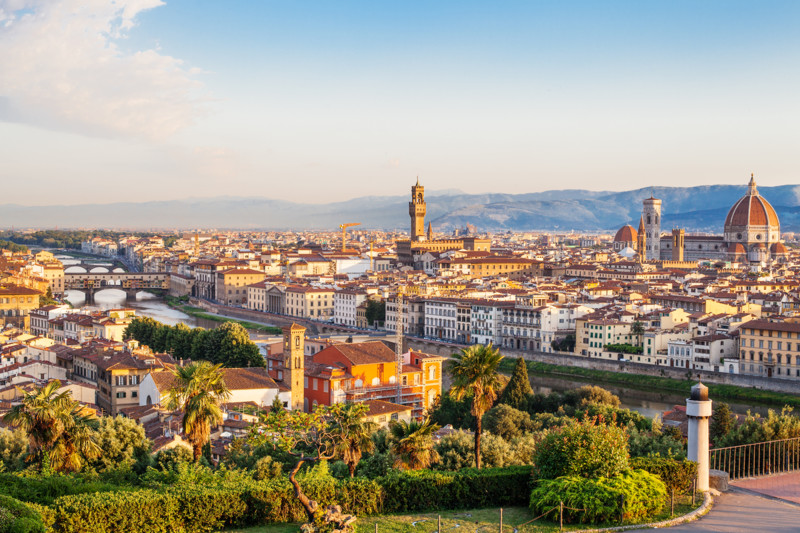
Few cities in the world carry the weight of history, art, and beauty that Florence does. The birthplace of the Renaissance, capital of the Tuscan region, and home to some of the greatest artistic and architectural achievements ever created, Florence is a city that rewards visitors at every turn. Whether you're standing in front of Michelangelo's David, watching the sun set over the Arno River from the Ponte Vecchio, or simply wandering through a neighbourhood market with a glass of Chianti in hand, Florence has a way of making every moment feel significant.
Areas to Stay
Historic Centre (Centro Storico): For first-time visitors, there is no better base than the heart of the city. Staying here puts you within walking distance of virtually every major sight — the Duomo, the Uffizi, the Ponte Vecchio, and the Piazza della Signoria are all minutes from your door. The neighbourhood is lively, well-served by restaurants and cafés, and gives you the full Florence experience from the moment you step outside. It is also the most in-demand area, so book well ahead, particularly in summer.
Oltrarno: Across the Arno River from the historic centre, Oltrarno is Florence's artisan quarter and arguably its most atmospheric neighbourhood. Workshops of goldsmiths, leather workers, and furniture restorers line the narrow streets alongside excellent trattorias and wine bars. It's slightly quieter than the centro storico, a little more local in feel, and just a short walk across any of the river bridges to the main sights. A wonderful choice for travellers who want to feel embedded in the city rather than passing through it.
Santa Croce: Located to the east of the historic centre, the Santa Croce neighbourhood takes its name from the magnificent basilica that anchors it. It's a lively, walkable area with a strong local character — excellent restaurants, neighbourhood bars, and the Mercato di Sant'Ambrogio, one of Florence's best food markets, are all within easy reach. A good middle ground between the bustle of the centro storico and the quieter residential areas further out.
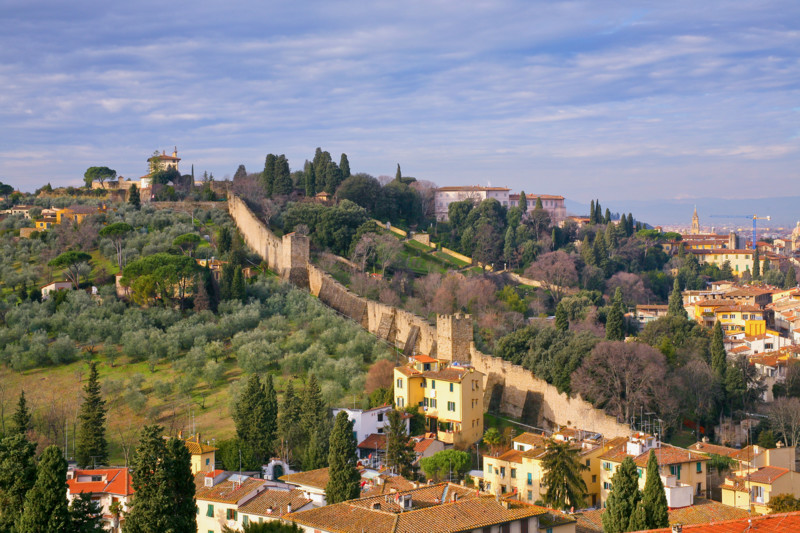
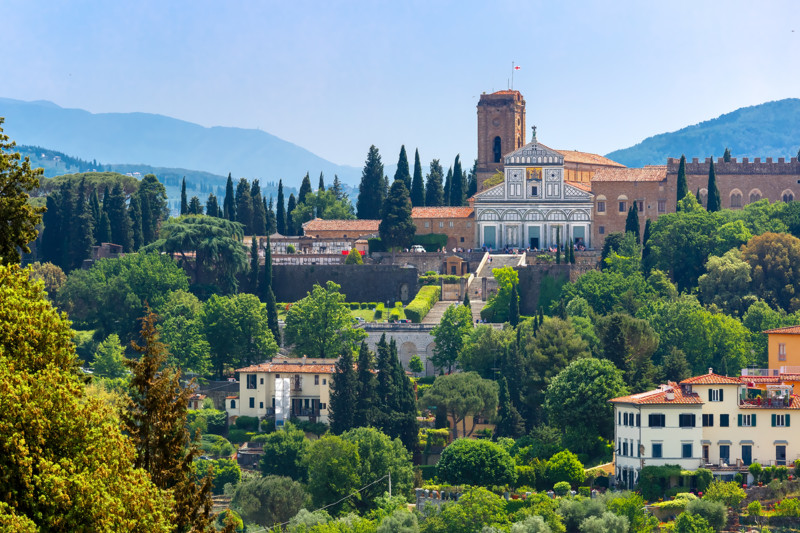
Boboli and San Miniato: For those who prefer a quieter, more residential setting with easy access to the city, the area around the Boboli Gardens and the hilltop church of San Miniato al Monte offers a more peaceful alternative. The views over Florence from up here are extraordinary, and the neighbourhood has a gentler pace while remaining very much part of the city.
Suggested Sights
Florence is home to an extraordinary concentration of art and architecture, and even a week here barely scratches the surface. The essentials include:
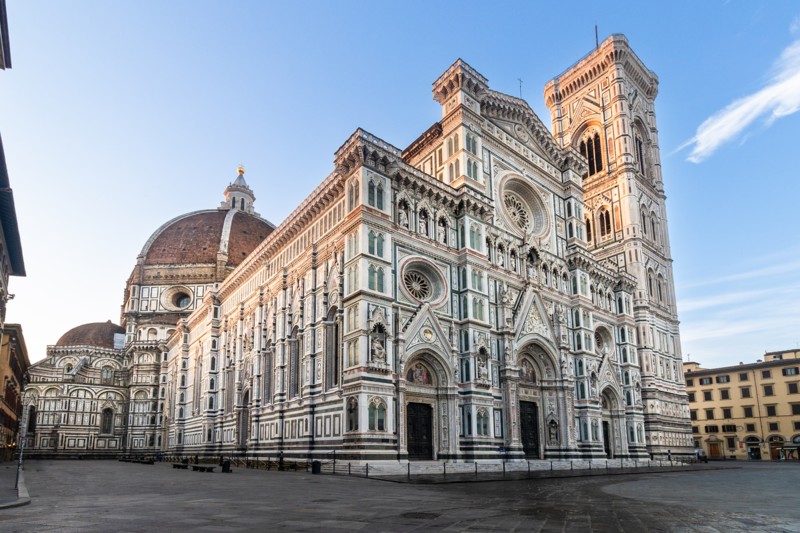
- The Duomo — the Cathedral of Santa Maria del Fiore — is the defining image of Florence. Brunelleschi's dome, an engineering marvel of the 15th century, dominates the skyline and can be climbed for one of the best views in the city. The adjacent Baptistery, with its famous bronze Gates of Paradise, and the Giotto Bell Tower are equally worth your time.
- The Uffizi Galley is one of the greatest art museums in the world, housing works by Botticelli, Leonardo da Vinci, Michelangelo, Raphael, and Caravaggio among countless others. Botticelli's Birth of Venus and Primavera alone justify the visit. Book tickets well in advance — queues without a reservation can be formidable.
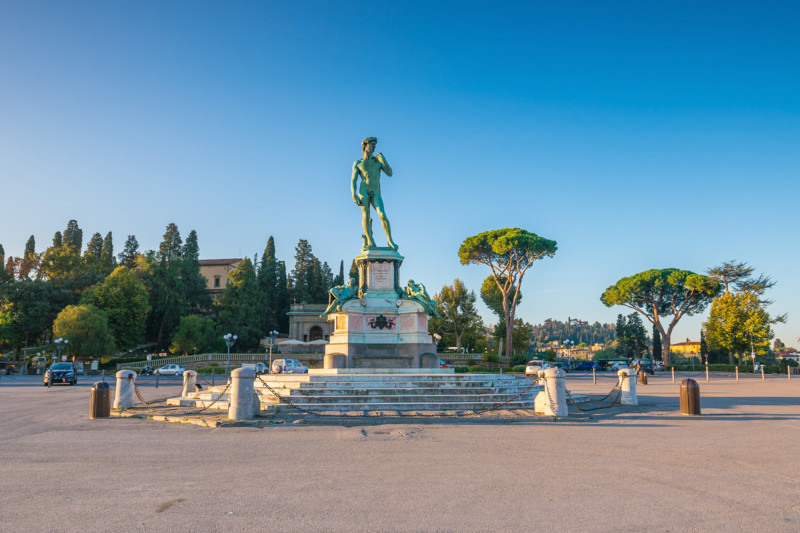
- The Accademia Gallery is home to Michelangelo's David, one of the most recognizable works of art ever created. Seeing it in person, at its full five-metre height, is a genuinely moving experience. Again, advance booking is strongly recommended.
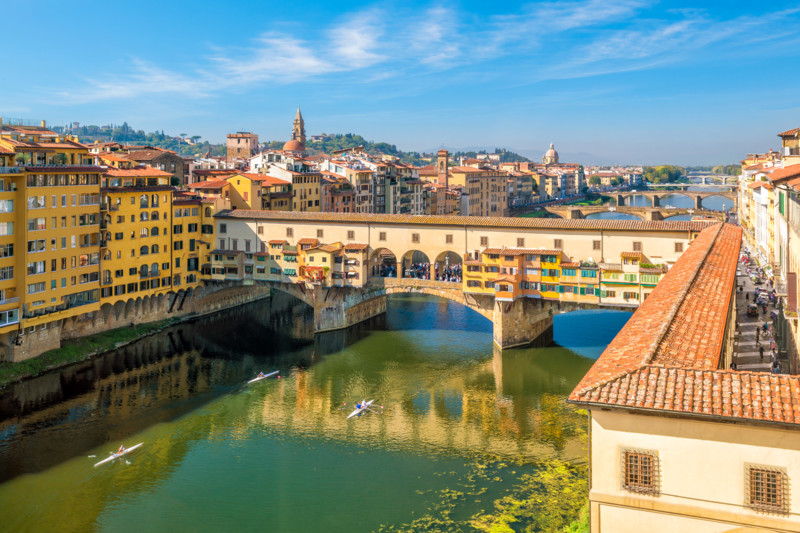
- The Ponte Vecchio, Florence's oldest bridge, is lined with goldsmiths and jewellers and offers one of the most iconic views in Italy, particularly at sunset when the light turns the Arno golden.
- The Piazza della Signoria is the political and social heart of Florence, flanked by the Palazzo Vecchio and an open-air sculpture gallery that includes a copy of the David and Cellini's extraordinary Perseus. It's the kind of square you return to multiple times simply to sit and take it all in.
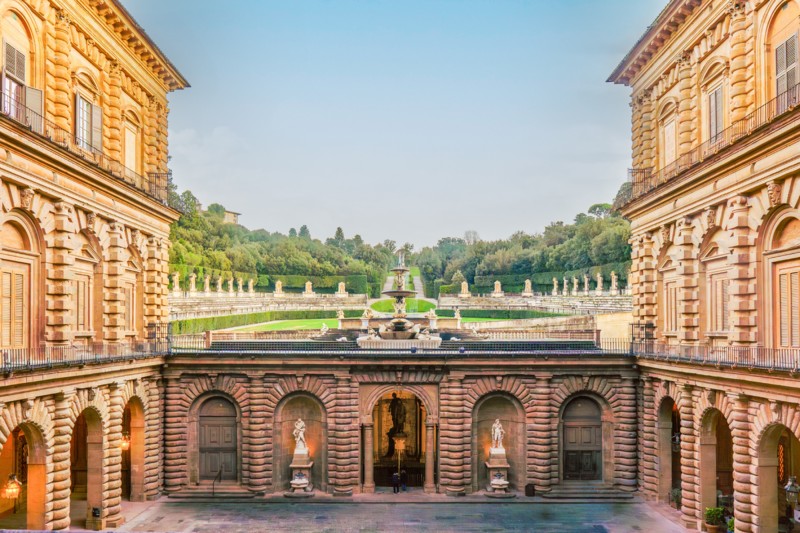
- The Boboli Gardens, behind the Palazzo Pitti, offer a beautifully landscaped escape from the city streets — terraced gardens, fountains, sculptures, and sweeping views over Florence and the surrounding Tuscan hills.
- The Basilica of Santa Croce is the burial place of Michelangelo, Galileo, Machiavelli, and Dante, and one of the most beautiful Gothic churches in Italy. Its cloisters are particularly serene.
Excursions
Florence's position in the heart of Tuscany makes it an outstanding base for day trips into the surrounding region.
Tuscany by Car or Tour: The rolling hills, cypress-lined roads, and hilltop villages of the Tuscan countryside are among the most beautiful landscapes in Europe. A day spent driving through the Chianti wine region — stopping at vineyards, picking up local cheese and salumi, and wandering through villages like Greve in Chianti and Panzano — is one of the great pleasures of any Tuscany visit.
Siena: One of the best-preserved medieval cities in Italy, Siena is about an hour and a half from Florence by bus or car. Its shell-shaped Piazza del Campo, striped Gothic cathedral, and narrow contrada streets are magnificent, and the city has a very different feel from Florence — slower, more intimate, and deeply proud of its own identity.
San Gimignano: Known as the "Town of Fine Towers," this small hilltop town in the Siena province is a UNESCO World Heritage Site and one of the most atmospheric stops in all of Tuscany. Its medieval towers rise dramatically above the surrounding vineyards, and the local Vernaccia white wine is not to be missed.
Pisa: Most visitors come to see the Leaning Tower, and it genuinely is worth the trip — but the Campo dei Miracoli, the cathedral square in which it stands alongside the Baptistery and the Cathedral, is one of the most beautiful public spaces in Italy. Pisa is about an hour from Florence by train and makes for an easy half-day excursion.
The Cinque Terre: For a longer day trip or an overnight extension, the five cliff-hanging villages of the Cinque Terre on the Ligurian coast are about two hours from Florence by train. The scenery is spectacular, the seafood is excellent, and the hiking trails between the villages are among the most scenic in Italy.
Typical Weather and Best Time to Visit
Florence sits in a river valley surrounded by hills, which gives it a climate of warm summers, mild springs and autumns, and cool but generally dry winters.
Spring (April and May) is widely considered the best time to visit. Temperatures are warm and comfortable, typically ranging from the mid-teens to the low twenties Celsius, the city is in full bloom, and the crowds, while present, have not yet reached their summer peak. This is the ideal window for combining sightseeing with day trips into the Tuscan countryside.
Summer (June through August) is hot, busy, and expensive. Temperatures regularly climb into the low to mid-thirties and the city can feel very crowded, particularly in July and August. That said, the long evenings are beautiful, outdoor dining is at its best, and the energy of the city in summer has its own appeal. If you travel in summer, book everything well in advance and plan your visits to major museums for early morning.
Autumn (September and October) is another excellent window, and many experienced travellers consider it the best time of all. The summer heat softens, the crowds thin out, the Tuscan harvest is underway, and the light across the hills and the city takes on a golden warmth that is hard to describe and impossible to forget. October in particular can be magical.
Winter (November through March) is cool and quiet. Temperatures hover between five and ten degrees Celsius, with some rain particularly in November and December. The city is far less crowded, hotels are more affordable, and the major museums are much easier to enjoy at a relaxed pace. Florence at Christmas, with its markets and festive atmosphere, has considerable charm, and the winter light on the Duomo and the Arno is something special in its own right.
A Final Note
Florence is a city that reveals more the longer you spend in it. If your schedule allows, resist the temptation to rush — give yourself at least four or five nights, resist the urge to tick off every sight, and leave room for the kind of unhurried afternoon in a neighbourhood trattoria or a quiet hour in a less-visited church that makes a trip truly memorable. Florence rewards those who slow down, and it will stay with you long after you've returned home.
Not sure where to start? Give one of our Travel Agents a call at 1-800-665-4981 and let us curate your dream trip to Florence, Italy.