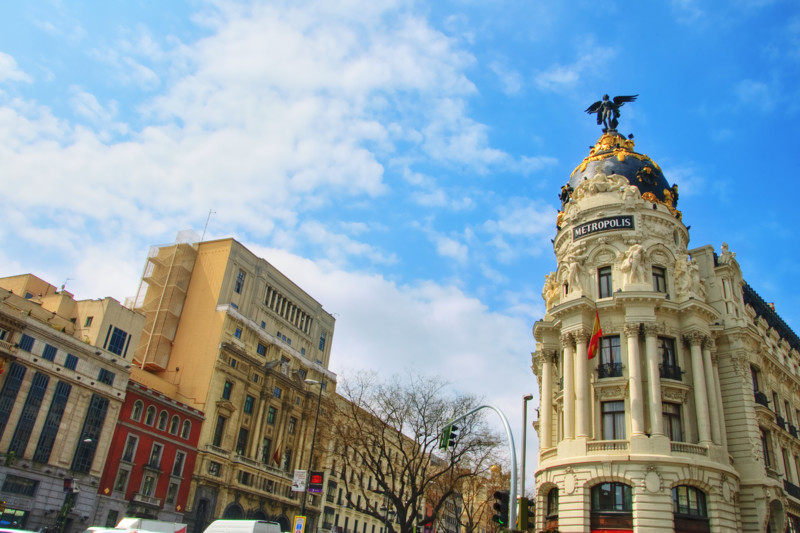
Madrid does not ease you in gently. From the moment you step into the noise and light of the Gran Vía, or turn a corner and find the Prado sitting there, vast and quietly authoritative, the city makes its intentions clear. This is a capital that takes everything seriously — art, food, football, conversation, the correct preparation of a vermouth — and does all of it with an intensity and warmth that is entirely its own.
It is also, by European capital standards, surprisingly underestimated. Visitors who have been to Barcelona tend to arrive with lowered expectations and leave with Madrid near the top of their list. The city has something arguably more sustaining than beaches or iconic set pieces: depth. Three of the world's great art museums within walking distance of each other. A food culture that runs from morning market to late-night tapas bar without pause. A historic centre of royal palaces and grand plazas that makes an extraordinary backdrop for simply wandering. And a nightlife that is, by common European consensus, the best on the continent — not because it is the loudest, but because it lasts the longest and takes the most pleasure in itself.
When to Go
Madrid sits on the high Castilian meseta at 667 metres — the highest capital in the EU — giving it a more extreme climate than Spain's coastal cities: genuinely hot summers, genuinely cold winters, and two shoulder seasons that are among the most pleasant in Europe.
May and June are the finest months. Temperatures sit between 18 and 28°C, the days are long, the parks and terraces are at their best, and the city feels easy and festive. May's Fiestas de San Isidro bring free concerts and street celebrations across the city for most of the month.
September and October offer the autumn equivalent — comfortable temperatures of 18–25°C, quieter museums and the excellent golden light that makes Madrid particularly beautiful in the afternoon.
July and August are intensely hot, regularly exceeding 35°C. Structure days carefully: monuments and walking in the early morning, museums in the afternoon heat. The upside is that August sees many Madrileños leave for the coast, making the major attractions noticeably less crowded.
November through March brings cooler temperatures (dropping to near zero on winter nights) and significantly lower prices. Christmas in the Plaza Mayor is atmospheric and beautiful, and the museums are at their most accessible.
Typical weather: Jan–Feb 4–10°C · Mar–Apr 10–18°C · May–Jun 18–28°C · Jul–Aug 28–38°C · Sep–Oct 18–26°C · Nov–Dec 8–15°C
Where to Stay
- Sol and Centro is the geographic heart of Madrid and the most convenient base — the Prado is twenty minutes on foot, La Latina's tapas bars are five minutes south, and virtually everything else is walkable. Busy and commercial, but unbeatable for first-time visitors.
- La Latina and Lavapiés, south of the Plaza Mayor, offer the most traditional and characterful side of central Madrid. La Latina's Cava Baja is lined with tapas bars where a drink brings a complimentary tapa; the Sunday El Rastro flea market fills the surrounding streets. Lavapiés is Madrid's most diverse and creative neighbourhood, with excellent independent restaurants and vibrant street life. Both suit travellers who want to feel like a Madrileño rather than a tourist.
- Huertas and Barrio de las Letras — the Literary Quarter, where Cervantes once lived — sits between the Prado and Sol. A dense concentration of wine bars, tabernas and restaurants alongside proximity to all three great museums makes it the most natural base for culture-focused visitors.
- Malasaña and Chueca, north of the Gran Vía, are Madrid's creative and progressive heart. Malasaña is bohemian and independent-minded, with excellent coffee shops and small restaurants. Chueca is lively and inclusive year-round, peaking spectacularly during the Orgullo (Pride) celebrations in late June. Both suit younger travellers who prioritise nightlife and independent dining.
- Salamanca, east of the Retiro, is Madrid's most affluent neighbourhood — designer boutiques, gourmet shops, elegant restaurants and luxury hotels. Quieter and more refined than the centre, with easy access to the Prado and Retiro Park.
Must-See Sights
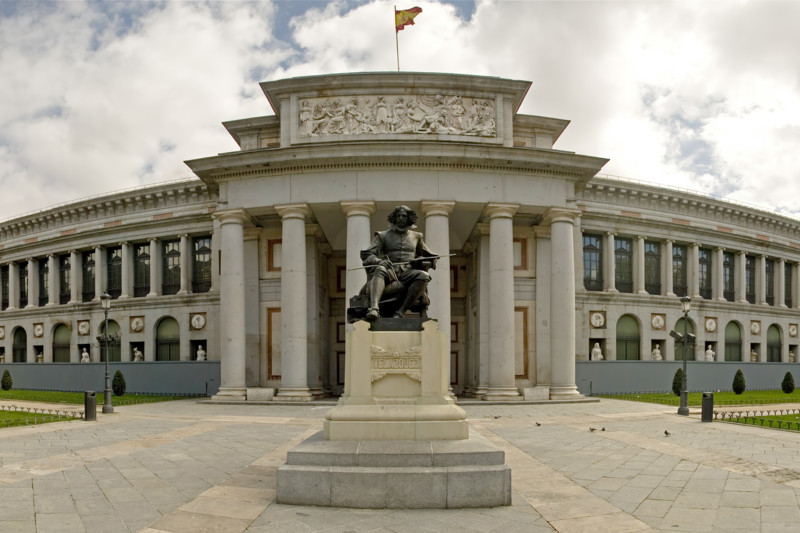
The Prado Museum is the non-negotiable reason to come to Madrid. Eight centuries of European painting and sculpture, with extraordinary depth in Spanish, Flemish and Italian masters. Velázquez's Las Meninas, Goya's shattering Black Paintings, Bosch's Garden of Earthly Delights and El Greco's otherworldly figures fill room after room. Allow at least three hours and consider returning — the Prado is inexhaustible.
The Reina Sofía houses Picasso's Guernica — the great anti-war painting that is one of the most powerful works of art in any museum in the world — alongside the finest collection of twentieth-century Spanish art anywhere, including major works by Dalí and Miró.
The Thyssen-Bornemisza completes the Golden Triangle, filling in the centuries the other two leave out: from medieval Italian paintings through the Dutch Golden Age, Impressionism and Expressionism to American pop art. The most accessible of the three for visitors without a specialist art background.
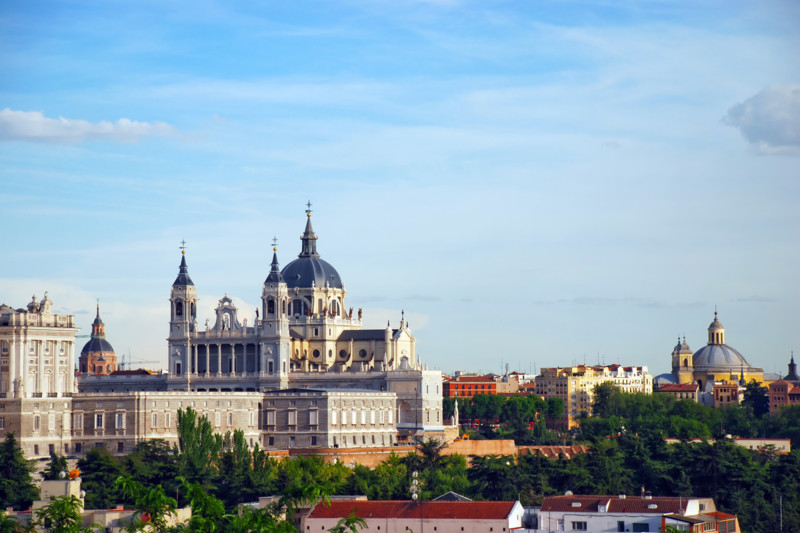
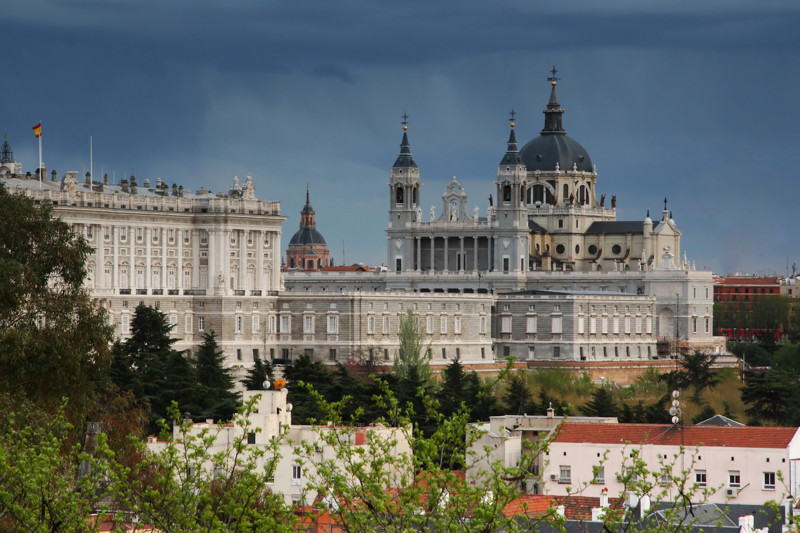
The Royal Palace is the largest royal palace in Western Europe by floor area. Fifty state rooms are open to the public, including the extraordinary Throne Room with its Tiepolo ceiling fresco and the Royal Armoury, one of the finest collections of arms and armour in the world.
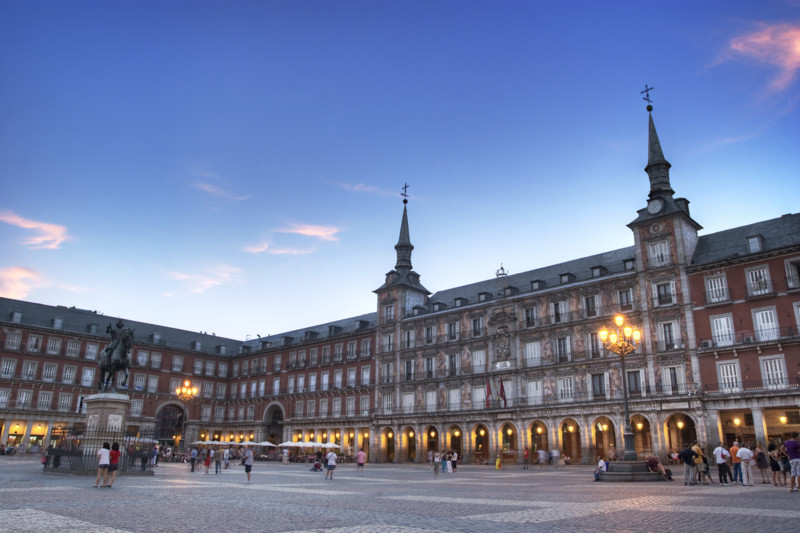
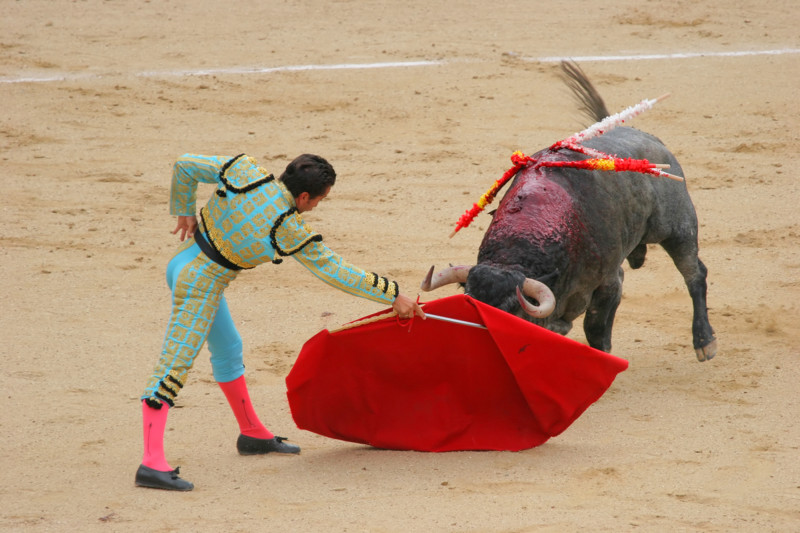
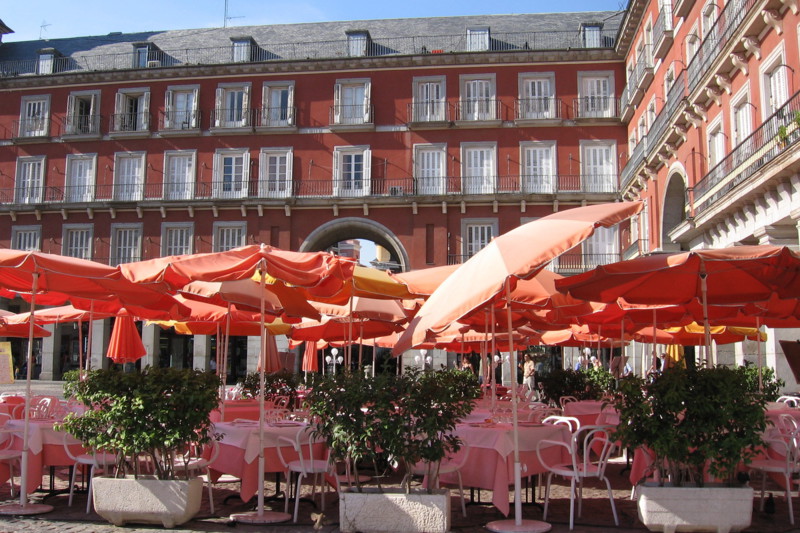
Plaza Mayor is Madrid's great communal square — a vast arcaded seventeenth-century space that has served as market, bullring and the stage for royal proclamations across the centuries. Today it's best experienced at a terrace table in the early evening, with a beer and the city going by around you.
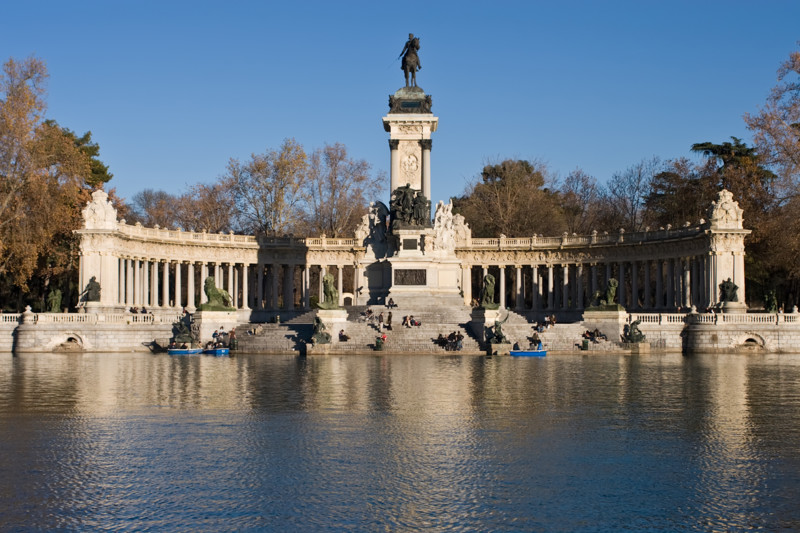
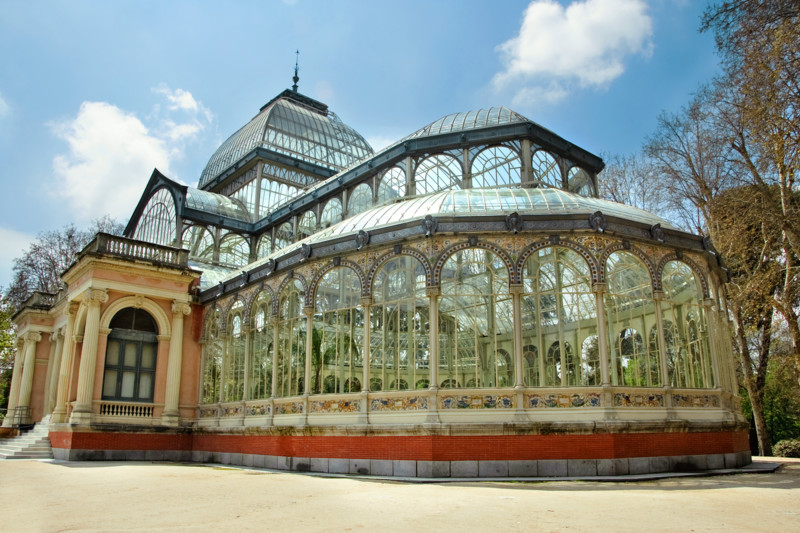
Retiro Park is Madrid's green lung: 125 hectares of formal gardens, wooded paths and the beautiful iron-and-glass Palacio de Cristal. The central lake, the rose garden (spectacular in May) and the Sunday book market along the Cuesta de Moyano are among its pleasures.
El Rastro, every Sunday morning in La Latina, is one of Europe's great flea markets — antiques, vintage clothing, books, records and general junk that occasionally hides genuine treasure, surrounded by tapas bars that open early and fill quickly.
The Mercado de San Miguel, steps from the Plaza Mayor, is the best introduction to Madrid's food culture: jamón ibérico, anchovies, Manchego, croquetas and excellent Spanish wines served at beautiful iron-and-glass bar counters. Best visited mid-morning or at aperitivo hour.
Day Trips:
- Toledo (30 min by high-speed train) is a medieval city of extraordinary completeness where Christian, Moorish and Jewish cultures coexisted, leaving behind a cathedral, El Greco museum, synagogues and Alcázar fortress unlike anywhere else in Spain.
- Segovia (30 min by train) has two unmissable monuments: a Roman aqueduct of 166 arches built without mortar in the first century AD, and a fairy-tale Alcázar castle said to have inspired Disney's Cinderella.
- Ávila (90 min by train) is the best-preserved medieval walled city in Spain — the complete circuit of eleventh-century walls with 88 towers can be walked in a couple of hours.
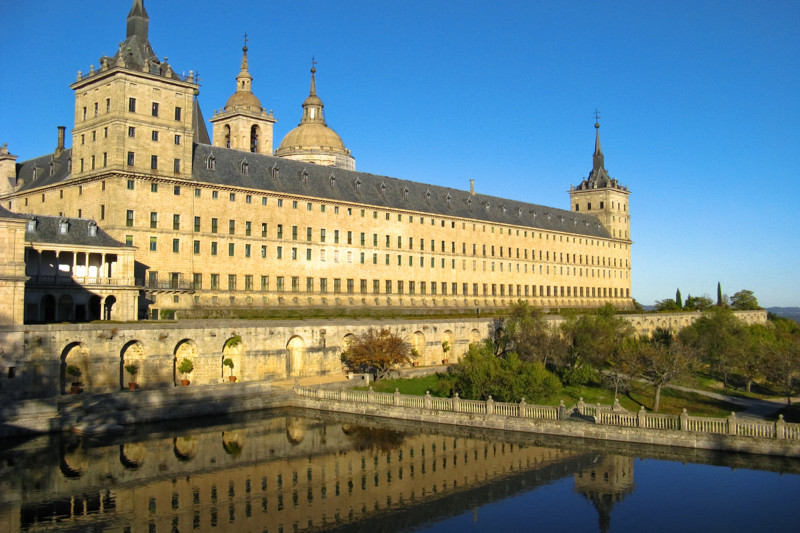
- El Escorial (1 hour by train) is Philip II's vast monastery-palace: austere, historically extraordinary and the burial place of the Spanish monarchs.
Getting There and Around
Madrid Barajas Airport is a major European hub with connections from Canada via direct flights and European connections. Metro Line 8 connects the airport to the city centre in 25 minutes. Within the city, the metro is extensive and easy to navigate, and the historic centre is highly walkable. Atocha station connects to Toledo, Segovia, Ávila and El Escorial, as well as Barcelona and Seville by high-speed rail.
Flights from Canada, hotel accommodation and airport transfers are included across our Madrid packages. Contact us at 1-800-665-4981 for current departure dates, pricing and availability.