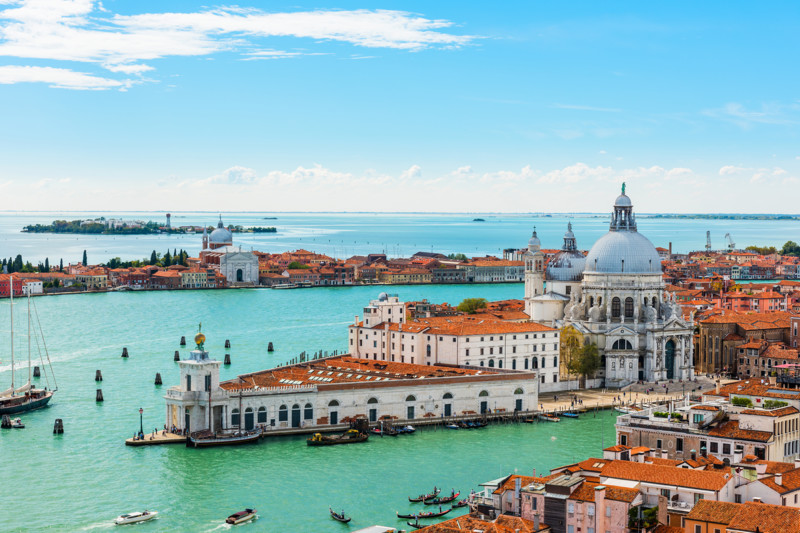
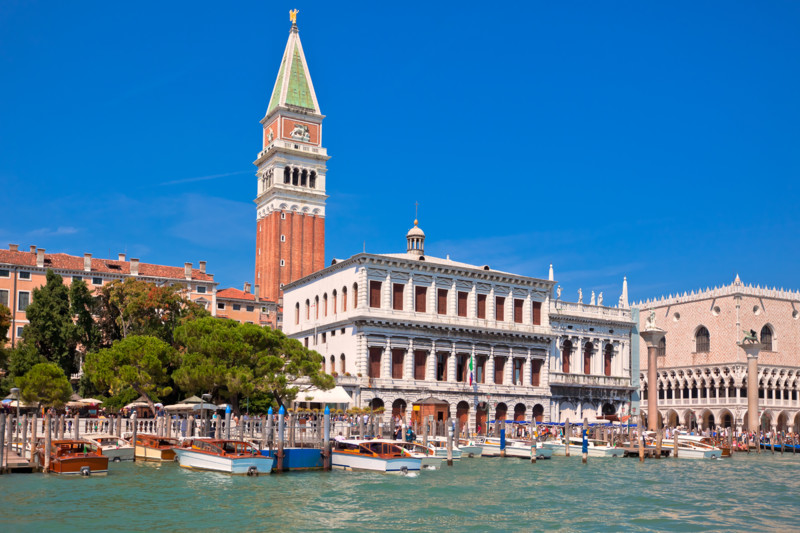
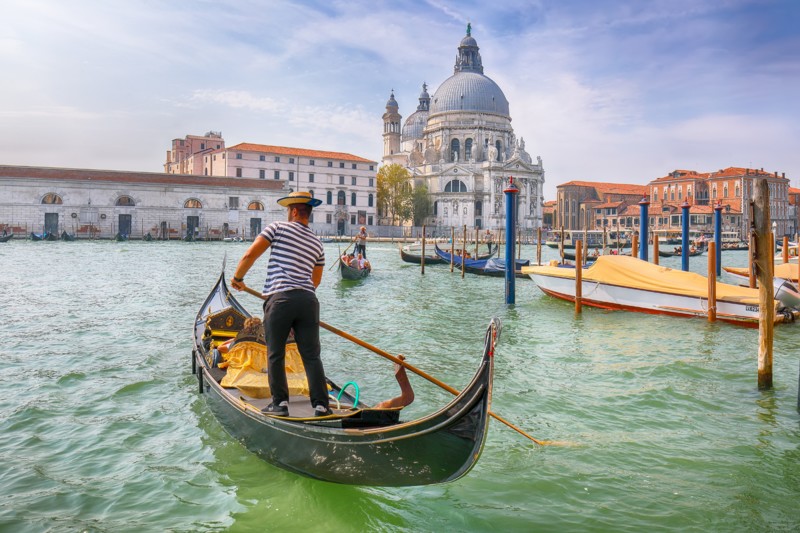
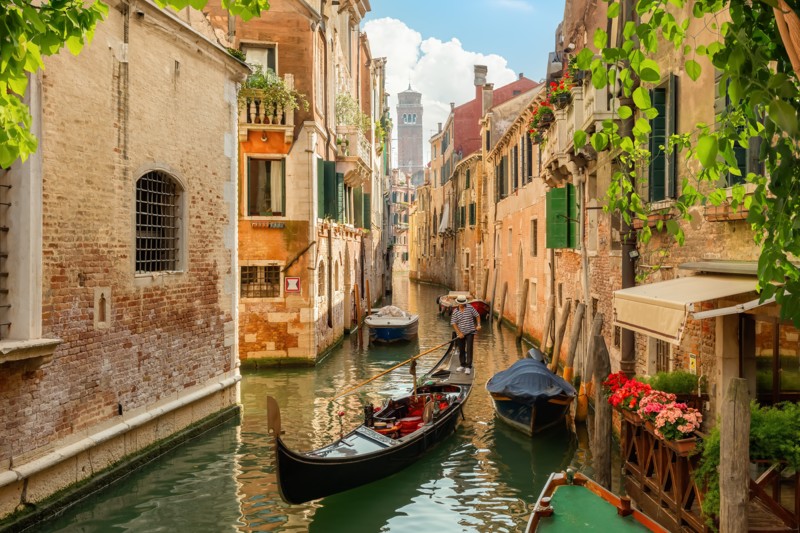
Some trips are simply greater than the sum of their parts, and a Venice and Florence holiday is a prime example. One city is built on water and seems to defy the laws of physics; the other is built on art and seems to defy the limits of human ambition. They're different enough to feel like two distinct journeys, and yet they sit just two hours apart by high-speed train, close enough to combine into one deeply satisfying Italian adventure. If you've ever thought about doing Italy properly, this is the itinerary.
Where to Stay
In Venice, the city is divided into six districts called sestieri, and choosing the right one makes a real difference to your experience. San Marco is the most central, putting you steps from the main sights, but it's also the busiest and most expensive. Dorsoduro, just across the Grand Canal, is where many experienced Venice visitors end up returning to: it's residential, quieter in the evenings, and still very well positioned. Cannaregio in the north is the most authentically local of the central neighbourhoods, with canal-side restaurants and the historically fascinating Jewish Ghetto. San Polo and Santa Croce are lively and well-connected, and Castello, the largest sestiere stretching east from San Marco, has some of the best local restaurants in the city and far fewer tourists than you'd expect given how close it sits to the centre.
In Florence, the Centro Storico puts you in the middle of everything and within walking distance of virtually all the main sights, though it commands a premium. The Oltrarno, the neighbourhood south of the Arno, is the area experienced travellers tend to love most. It has a genuine artisan character, with leather workshops, family-run trattorias, and a more relaxed pace in the evenings. The Santa Croce area to the east is lively and well-positioned, while the neighbourhood around Santa Maria Novella is convenient if you're travelling with heavy luggage or arriving by train.
What to See and Do
Between these two cities, you have more world-class art and architecture than almost anywhere else on earth. The trick is not to try to see all of it.
In Venice, start with Piazza San Marco, ideally very early in the morning before the day-trippers arrive, when the square has a grandeur that the midday crowds genuinely obscure. The Basilica di San Marco, with its Byzantine domes and golden mosaics, is extraordinary; the adjacent Doge's Palace, seat of Venetian power for nearly a thousand years, is one of the finest Gothic buildings anywhere and not to be missed. Book both in advance.
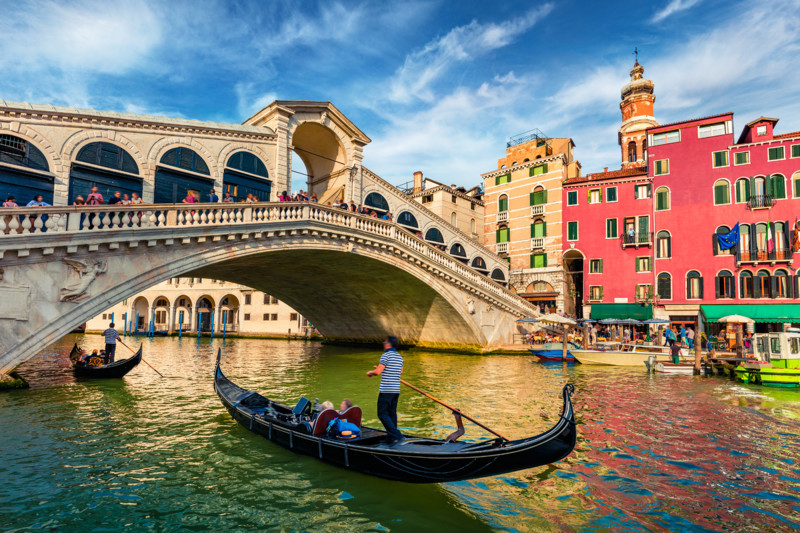
The Grand Canal itself is an attraction. Take the number 1 vaporetto from the train station all the way to San Marco and just watch the city go by. The palaces lining the canal, built by the merchant families who made Venice the greatest trading power in the medieval world, are magnificent from the water in a way no photograph captures. The Rialto Bridge and its market, including a fish market that's been operating since the 11th century, is a vivid, living reminder that Venice is still, beneath all the tourism, a real city.
For art, the Gallerie dell'Accademia in Dorsoduro holds the finest collection of Venetian painting in existence, and the Peggy Guggenheim Collection next door is one of the great modern art museums in Europe, both housed in settings as memorable as the works themselves. The Basilica dei Frari in San Polo contains Titian's breathtaking Assumption of the Virgin, which dominates the high altar and is widely considered one of the finest paintings in Italy.
In Florence, the Uffizi Gallery is one of the greatest art museums in the world. Botticelli's Birth of Venus and Primavera, Leonardo's Annunciation, Michelangelo's Doni Tondo, and so much more, all under one roof. Book weeks in advance in peak season; the walk-in queues can stretch for hours. Michelangelo's David at the Galleria dell'Accademia is another experience that no reproduction prepares you for. It genuinely stops you cold in a way that's hard to describe until you've stood in front of it yourself. Book this one in advance too.
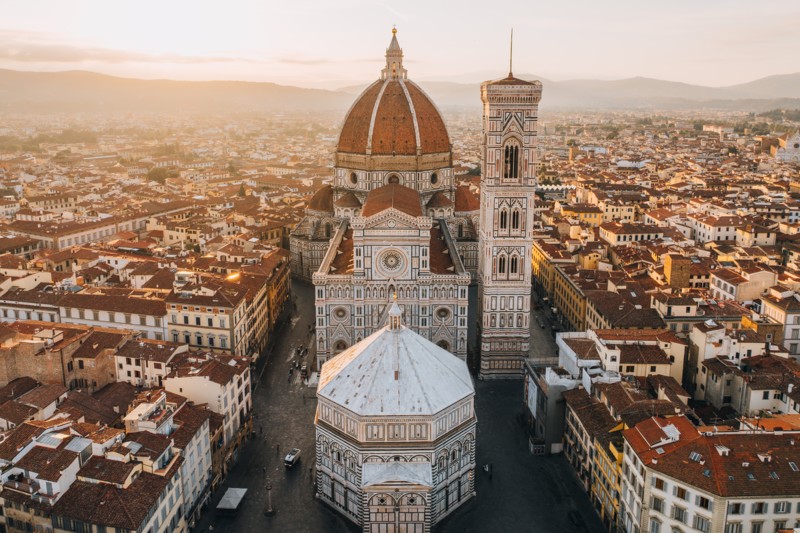
The Duomo, Brunelleschi's great dome sitting over the Cathedral of Santa Maria del Fiore, is one of the most audacious engineering achievements in history, and climbing it rewards you with a view over Florence's terracotta rooftops and the surrounding Tuscan hills that's worth every step. The Baptistery's bronze doors by Ghiberti, which Michelangelo called the Gates of Paradise, are right there alongside it.
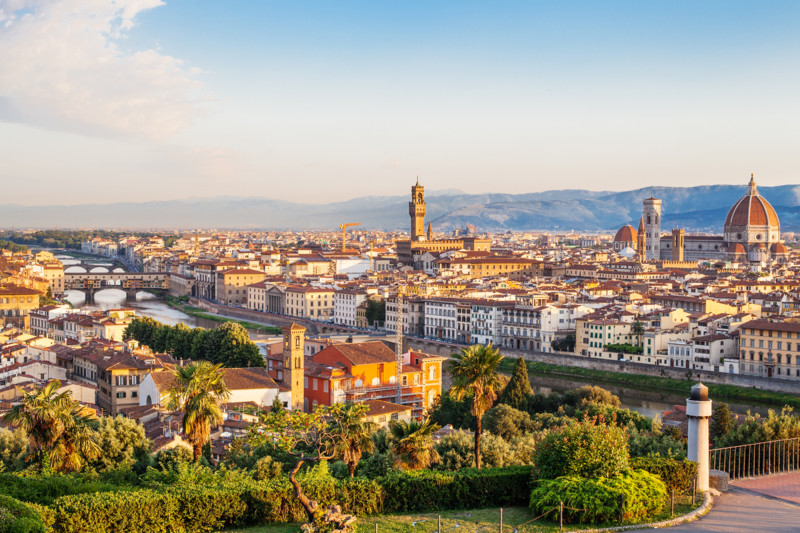
Beyond the headline sights, don't overlook the Bargello, Florence's national sculpture museum, housing magnificent works by Donatello and early Michelangelo, and far less crowded than the Accademia. The church of Santa Croce is the burial place of Michelangelo, Galileo, and Machiavelli, with Giotto frescoes that are among the most important in the city. The Palazzo Pitti and Boboli Gardens south of the Arno are a half-day on their own. And the walk up to Piazzale Michelangelo at dusk, for the panoramic view over the whole city as the light fades, is the kind of moment you'll be trying to describe for the rest of your life.
Getting Around
Venice has no cars, no buses, and no bicycles. It's water and feet, and nothing else. That's part of what makes it extraordinary. The vaporetto water buses are the main public transport, and Line 1 running the full length of the Grand Canal is the one you'll use most. Multi-day passes offer good value. Walking through the city's network of narrow streets and bridges is genuinely wonderful, and getting slightly lost is not just inevitable, it's one of the best things about being there. Gondolas are an iconic experience but a tourist one; if you go, choose a quiet back canal rather than the Grand Canal for something more atmospheric. The traghetti, traditional gondola ferries that cross the canal at a handful of points, are cheap, quick, and a very local way to get across.
Florence is largely closed to private cars in its historic centre, which makes it one of the most walkable cities in Italy. The main sights are close together, the streets reward slow exploration, and good shoes matter more than any app or map. For getting between the two cities, the high-speed Frecciarossa train is fast, comfortable, and remarkably good value when booked in advance, covering two hours of beautiful Italian countryside from the Veneto into the heart of Tuscany.
When to Go
Spring and autumn are the sweet spots for both cities. April, May, September, and October offer mild temperatures, manageable crowds, and beautiful light. October is a favourite among people who've done the trip more than once. Summer is vibrant but hot, humid, and crowded, especially in July and August; if you go in summer, early mornings are your best friend. Winter is quiet and atmospheric in both cities. Florence's Christmas markets are lovely, and Venice in January, with morning mist rising off the lagoon and almost no tourists, is a different and remarkable experience. Venice's Carnevale in February is one of the great festivals of Europe and worth planning around if it appeals, though accommodation books up well ahead. Florence's Easter Sunday Scoppio del Carro, an ancient tradition involving a decorated cart and fireworks in front of the Duomo, is genuinely spectacular if your timing lines up.
A Final Word
Venice asks you to slow down; Florence asks you to look more carefully. Both cities reward the visitor who resists the urge to rush. Give yourself at least four nights in each, ideally more, stay in the city rather than commuting from the outskirts, and leave some unscheduled time to simply wander, eat well, and let the place come to you. An early morning in Venice before the day-trippers arrive and a late afternoon in Florence with nowhere particular to be are two of the finest experiences in European travel. Call one of our Travel Agents who've been there at 1-800-665-4981 and let us help you put together an Italian journey you'll be talking about for the rest of your life.