There is a particular pleasure to travel on the Iberian Peninsula that is hard to pin down and impossible to forget. It's the way a city like Barcelona operates on several registers at once — ancient and avant-garde, Mediterranean and distinctly its own. It's the way Madrid's energy builds through the day and peaks long after midnight, the tapas bars and terrace restaurants filling up as other European cities are going to sleep. It's Lisbon in the early morning, its tiled facades catching the light above the Tagus, the sound of fado drifting from somewhere in the Alfama. It's a beach on the Costa del Sol where the only decision required is whether to order a beer or a glass of fino sherry with your lunch.
The packages in this collection cover the Iberian Peninsula at its most rewarding — from Spain's three great cities to the Atlantic island life of Tenerife, from the cultural capitals of Catalonia and Castile to the hills of Lisbon and the orange-scented streets of Valencia. Each itinerary is self-guided, with flights from Canada, accommodation and all transfers included, leaving the hours themselves entirely yours.
When to Go
The Iberian Peninsula has a long, generous travel season, but the experience varies meaningfully by month.
- April, May and June are widely considered the best months for Barcelona, Madrid and Lisbon. Temperatures across all three cities sit between 18 and 26°C — warm enough for terraces, comfortable enough for walking all day and visiting monuments without wilting. The light in May and June is exceptional: long golden evenings that stretch well past nine o'clock, perfect for the Iberian habit of dining late and lingering longer. Spring also brings festivals — Seville's Feria de Abril (easily combined with a Madrid visit), Barcelona's Sant Jordi book and rose festival in late April, and Lisbon's Festas de Lisboa in June, when the city erupts in sardine grills, street music and paper decorations.
- September and October offer the autumn sweet spot. Summer crowds have thinned, temperatures have dropped to a very comfortable 20–25°C, and the cities feel more like themselves. October in particular is excellent for Madrid and Lisbon — the museums are uncrowded, the restaurants have their full menus back, and the light has a warm autumnal quality that suits both cities beautifully. For the Costa del Sol and Tenerife, September extends the beach season well into autumn, with sea temperatures still very warm and the resorts operating fully.
- July and August are peak summer — hot, busy and expensive in Barcelona, Madrid and Lisbon, but absolutely alive with energy. Barcelona's beach and festival culture is at full throttle, Madrid hosts its summer cinema and outdoor concerts, and the Costa del Sol is at its most vibrant. The heat in Madrid in particular can be intense (regularly 35°C and above), so early morning sightseeing and long afternoon breaks are the sensible approach. Tenerife, with its year-round subtropical climate, is equally good in summer as any other season.
- Winter (November to March) is quieter and mild in coastal cities and Tenerife, where temperatures rarely drop below 18–20°C year-round — making it one of the best European winter sun destinations available from Canada. Barcelona and Lisbon are pleasant and uncrowded in winter, though some attractions keep shorter hours. Madrid is colder — temperatures can approach zero at night — but the city remains fully alive, with excellent museum access and the bonus of the Christmas and New Year celebrations that animate the Plaza Mayor magnificently.
The Cities and Destinations
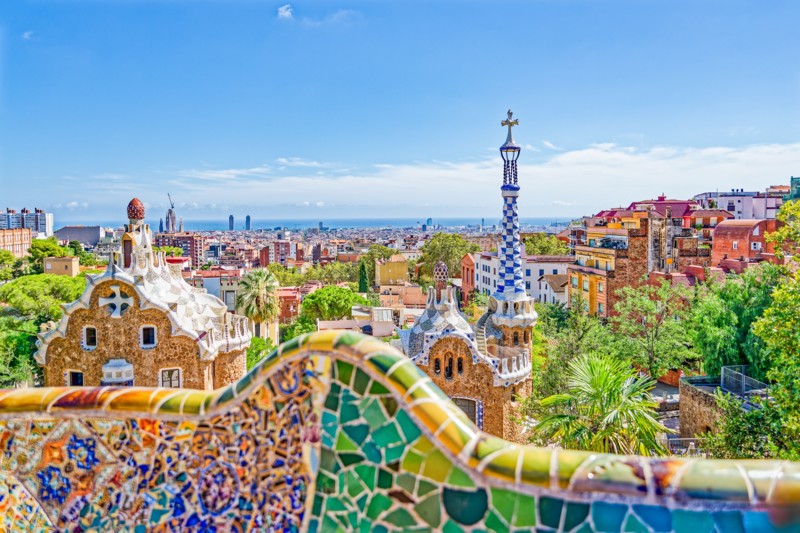
Barcelona Catalonia's capital is one of Europe's most visually extraordinary cities, and the architecture of Antoni Gaudí is the reason most people come — and the reason they come back. The Sagrada Família, Gaudí's unfinished basilica that has been under continuous construction since 1882, is the most visited monument in Spain and one of the most remarkable buildings in the world: an organic, soaring, deeply strange structure that looks like nothing else architecture has produced before or since. Book tickets well in advance and allow at least two hours inside. The Park Güell, Gaudí's mosaic-covered hilltop park above the city, offers the best views of Barcelona and another dose of his singular imagination. Casa Batlló and Casa Milà (La Pedrera) on the Passeig de Gràcia complete the essential Gaudí circuit.
Beyond Gaudí, Barcelona rewards wandering without a plan. The Gothic Quarter, where Roman walls run beneath medieval buildings and narrow lanes open suddenly onto sun-filled plazas, is best explored on foot in the morning. La Boqueria market on Las Ramblas is one of Europe's great food markets — arrive early, eat at the counters, and buy jamón and local olives to take back to the hotel. The Picasso Museum in the El Born neighbourhood has the finest collection of early Picasso in the world. And Barceloneta beach, a ten-minute walk from the Gothic Quarter, is the best urban beach in Europe — for a swim in the Mediterranean followed by a long lunch of seafood and cold wine.
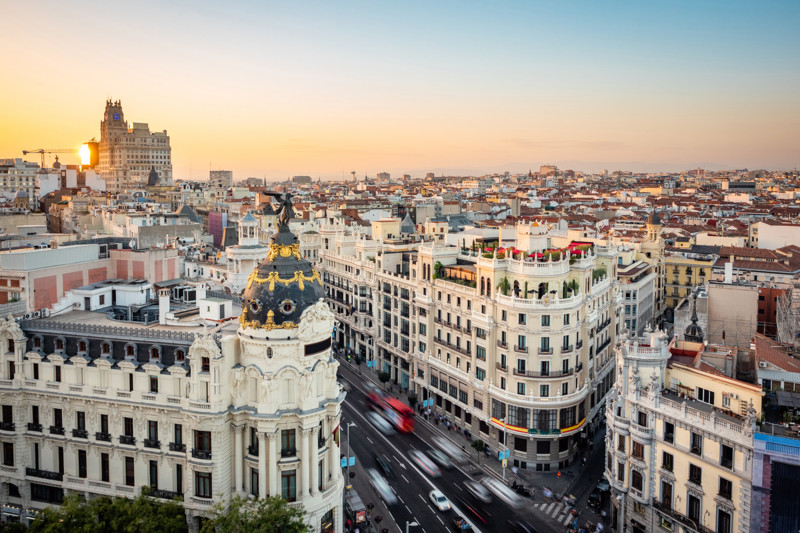
Madrid Spain's capital is the great underrated European city — less immediately photogenic than Barcelona or Lisbon, but deeper, richer and more rewarding the longer you spend with it. The Prado Museum is the non-negotiable: one of the finest art collections in the world, housing Velázquez, Goya, El Greco and Bosch in a building that itself feels like an argument for the importance of art. The Reina Sofía, a short walk away, houses Picasso's Guernica alongside the best collection of twentieth-century Spanish art anywhere. The Thyssen-Bornemisza, between the two, fills in the European art history that the Prado leaves out. Together, the three are known as the Golden Triangle of Art, and no other city in Europe has anything quite like them within walking distance of each other.
Beyond the museums, Madrid rewards eating and drinking at street level. The Mercado de San Miguel, a covered iron market near the Plaza Mayor, is the best place to graze through Spanish food — jamón ibérico, anchovies, croquetas, local cheeses and vermouth poured from the tap. The Plaza Mayor itself, a vast seventeenth-century arcaded square, is the city's great communal space. The Royal Palace — the largest royal palace in Western Europe by floor area — is an hour well spent. And the neighbourhood of Lavapiés, with its immigrant-inflected food scene and independent galleries, shows a Madrid that is less monumental and more alive.
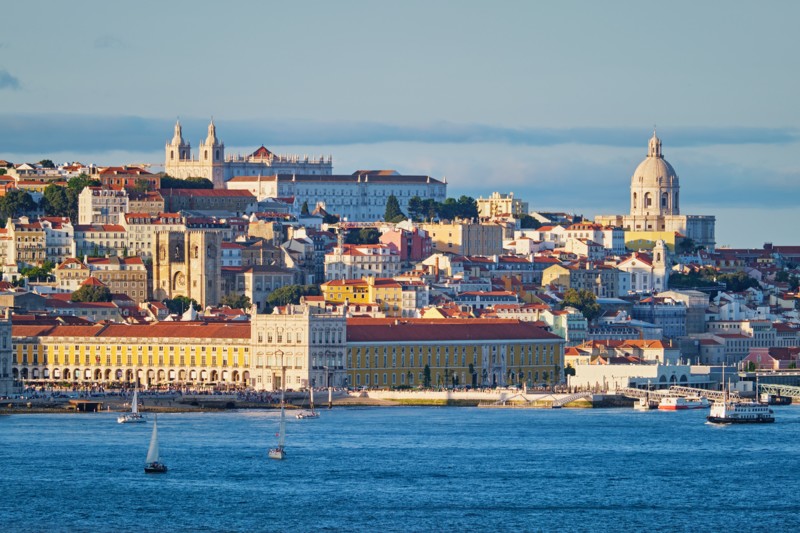
Lisbon Portugal's capital is one of Europe's most beautiful and least-changed cities — a hillside port of faded grandeur, azulejo-tiled facades, Moorish castles and neighbourhoods that have managed, improbably, to resist the homogenisation that has overtaken so many European capitals. The Alfama, the oldest neighbourhood in Lisbon, tumbles down the hillside below the Castelo de São Jorge in a tangle of steep lanes, laundry lines and small churches where fado — Portugal's melancholy, haunting song tradition — is still sung in the evenings as it has been for generations. The Belém district, reached by tram along the waterfront, has the Torre de Belém, the Jerónimos Monastery (a UNESCO World Heritage Site and one of the finest examples of Manueline architecture in the world) and the famous Pastéis de Belém café, where the original recipe custard tarts have been made since 1837.
Lisbon's trams are as much an experience as a transport system — the Number 28 winds through the oldest neighbourhoods on a route that takes in more of the city's character per kilometre than almost any other journey in Europe. The viewpoints (miradouros) scattered across the city's hills offer extraordinary panoramas over the terracotta roofscape and the wide mouth of the Tagus. And the food scene — petiscos (Portuguese tapas), grilled fish, bacalhau in its many forms, local wines from the Douro and Alentejo — is one of the most rewarding in southern Europe.
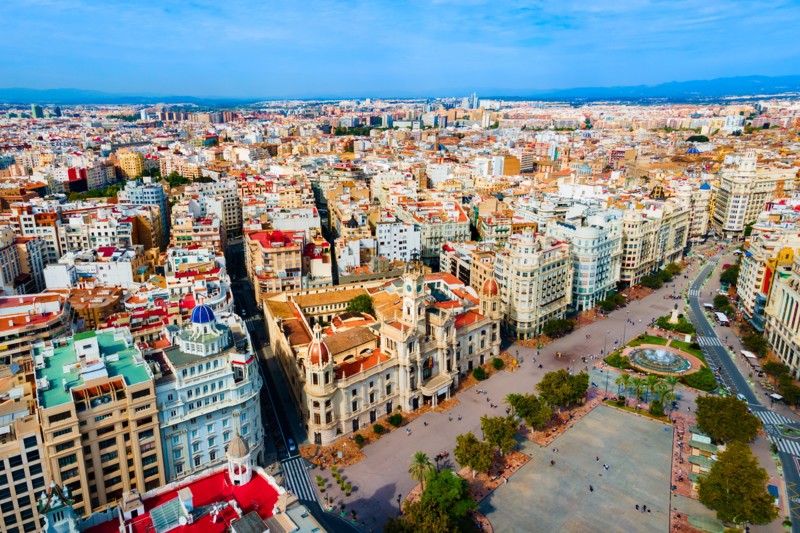
Valencia Spain's third city is the one that most travellers discover and then wonder why they waited so long. Valencia has the best weather in mainland Spain (over 300 days of sunshine per year), one of the most extraordinary urban parks in Europe, and a food culture that gave the world paella — the real thing, cooked over wood fire with rabbit and green beans, not the tourist versions found everywhere else.
The Jardín del Turia is the park that runs through the city along the course of a river that was diverted after catastrophic flooding in 1957: eight kilometres of gardens, sports facilities, playgrounds and cycle paths that cut through the urban fabric and make Valencia one of the most liveable cities in Spain. At its eastern end sits the City of Arts and Sciences, a futuristic complex of white curved architecture — designed by Valencia's native son Santiago Calatrava — housing an opera house, science museum, IMAX cinema and Europe's largest aquarium. It is one of the most visually striking pieces of contemporary urban design in the world, and a complete contrast to the city's beautiful historic centre, which includes a cathedral that claims to house the Holy Grail.
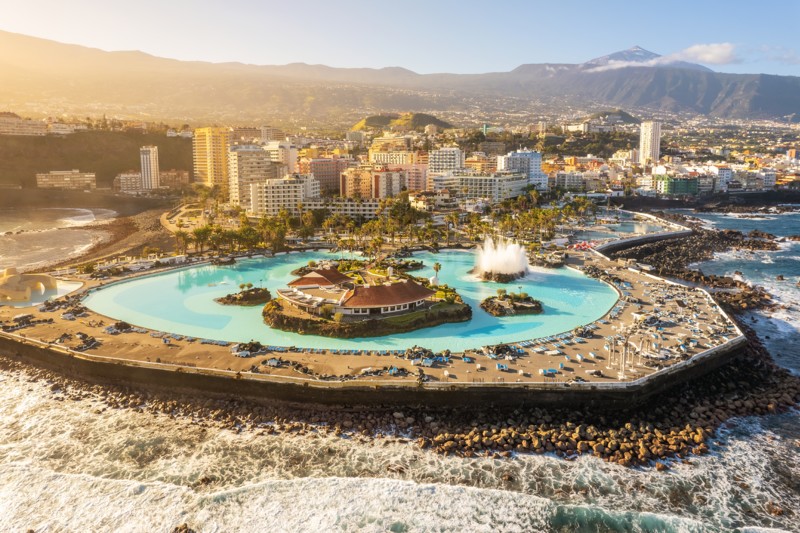
Tenerife (Puerto de la Cruz) The largest of the Canary Islands sits in the Atlantic off the coast of West Africa, and its subtropical climate — warm year-round, rarely exceeding 28°C in summer or dropping below 18°C in winter — makes it one of the most reliable sun destinations available from Europe or Canada at any time of year. Puerto de la Cruz, on the island's greener northern coast, is the more traditional and characterful of Tenerife's resort towns: a proper Spanish city with a historic centre, local restaurants, and the famous Lago Martianez — a series of stunning seawater pools designed by the Canarian artist César Manrique, set directly on the rocky Atlantic shoreline.
Inland, the Teide National Park is one of the great natural spectacles of the Atlantic — a volcanic landscape surrounding Mount Teide, Spain's highest peak, whose summit cable car offers views across to the other Canary Islands and, on clear days, to the coast of Africa. Day trips from Puerto de la Cruz can also take in the Anaga Rural Park, a UNESCO Biosphere Reserve of ancient laurel forest and dramatic ravines on the island's northeastern tip.
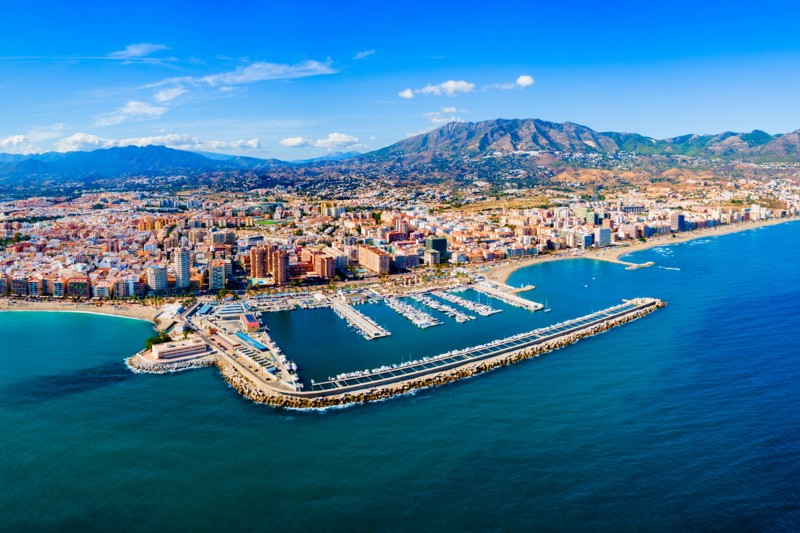
The Costa del Sol The southern coast of Andalusia has been drawing sun-seekers for decades, and with good reason: reliable sunshine from April through October, excellent beaches, good seafood along the waterfront, and a string of towns ranging from the stylish resort of Marbella to the lively city of Málaga, which has transformed itself over the past twenty years into one of Spain's most culturally interesting destinations — the Picasso Museum (in the city where he was born) and the excellent Carmen Thyssen Museum among its highlights. The Costa del Sol is best understood not as one resort but as a coastline of options, each with its own character, all of them sharing the same excellent weather and the same unhurried, tapas-and-sunshine philosophy.
Your Packages
Spain Your Way Barcelona · Madrid · Costa del Sol
The definitive Spanish journey in a single package, Spain Your Way moves from the country's most visually exciting city to its most culturally rich capital, and then south to the coast for a well-earned rest on the beaches of the Costa del Sol. Barcelona opens the trip in Gaudí's extraordinary universe — the Sagrada Família, Park Güell, the Gothic Quarter and Barceloneta beach setting the tone for a city of a thousand colours and pleasures. Madrid follows, with its majestic monuments, its world-class museums, its tapas culture and the effervescent energy of a city that genuinely never sleeps. Then the Costa del Sol brings the journey to a close in a completely different register: the sea, the sunshine, the long lunches of fresh fish and cold Manzanilla sherry that are synonymous with life in southern Spain. Three cities, three distinct experiences, one beautifully structured Spanish adventure.
Barcelona, Valencia and Madrid Barcelona · Valencia · Madrid
Three of Spain's greatest cities in one itinerary, connected by some of the fastest trains in Europe. The package opens in Barcelona — festive, creative, Gaudí-saturated and Mediterranean to its core — before heading south to Valencia, a city that rewards every traveller who makes the effort to get there. The Jardín del Turia, the City of Arts and Sciences, the historic centre and the food scene (including, naturally, paella eaten where it was invented) make Valencia one of the great Spanish discoveries. Then Madrid closes the journey with the Royal Palace, the Golden Triangle museums, the tapas bars of the Mercado de San Miguel and the living-room warmth of the Plaza Mayor. A complete portrait of Spain that goes well beyond the obvious.
Barcelona, Palma de Mallorca and Madrid Barcelona · Palma de Mallorca · Madrid
This package adds an island interlude to the classic Spanish city circuit, and it's a genuinely inspired addition. Palma de Mallorca — the capital of the Balearic Islands — is one of the Mediterranean's most beautiful port cities: a handsome Gothic cathedral rising above the bay, a maze of Renaissance palaces in the old city, excellent restaurants and beach clubs along the coast, and an island behind the city offering everything from the mountain villages of the Serra de Tramuntana to the long sandy beaches of the southeast. Flying between Barcelona and Palma, then from Mallorca to Madrid, means the journey feels varied and unhurried — city life, island life, and city life again, each refreshing the appetite for the next.
Madrid, Tenerife and Barcelona Madrid · Tenerife (Puerto de la Cruz) · Barcelona
An itinerary of beautiful contrasts: Spain's grand, land-locked, art-saturated capital; the subtropical island life and volcanic landscapes of Tenerife; and the Mediterranean energy of Barcelona to close. Madrid opens with its museums, gastronomy and culture — the Prado, the tapas bars, the Royal Palace, the plaza life. Then a short flight drops you into an entirely different world: the warmth and ease of Puerto de la Cruz, with its seawater pools, its volcanic beaches, the extraordinary lunar landscape of Teide National Park and the kind of relaxed island pace that a city itinerary makes you crave. Barcelona finishes the trip in style, with Gaudí's masterpieces, the Gothic Quarter and the Mediterranean coast waiting to be explored. This package includes More Moments activities to enhance your experience at each stop.
Barcelona, Madrid and Lisbon Barcelona · Madrid · Lisbon
The grandest Iberian itinerary in the collection, this package crosses the border from Spain into Portugal to create a journey that covers the peninsula's three most rewarding cities. Barcelona opens with its extraordinary architecture and Mediterranean energy. A high-speed train to Madrid delivers you into Spain's cultural and culinary heart — the museums, the tapas, the late nights and the majestic plazas. Then the journey continues west to Lisbon, and the mood shifts again: the Portuguese capital's tiled facades, fado-filled evenings, historic trams and extraordinary pastries offer a distinct and deeply pleasurable counterpoint to the Spanish cities that preceded it. Three countries (or rather, two — but three distinct cultures, three distinct cuisines and three genuinely different ways of inhabiting a city), connected by one beautifully conceived route. This package includes More Moments activities to add depth and discovery at each stop along the way.
Practical Notes
All packages include return flights from Canada, accommodation throughout, and all land and air transfers between destinations. Spain's high-speed rail network (the AVE) connects Barcelona, Valencia and Madrid in comfort and remarkable speed — the Barcelona–Madrid journey takes under three hours. For packages including Tenerife or Mallorca, short domestic flights connect the islands to the mainland seamlessly.
The best departure cities from Canada for the Iberian Peninsula are typically Toronto or Montreal, with connections through European hubs to Barcelona or Madrid. Contact us at 1-800-665-4981 for current departure schedules, pricing and availability across all packages.
Spain and Portugal await — unhurried, generous and exactly as good as you've always imagined.